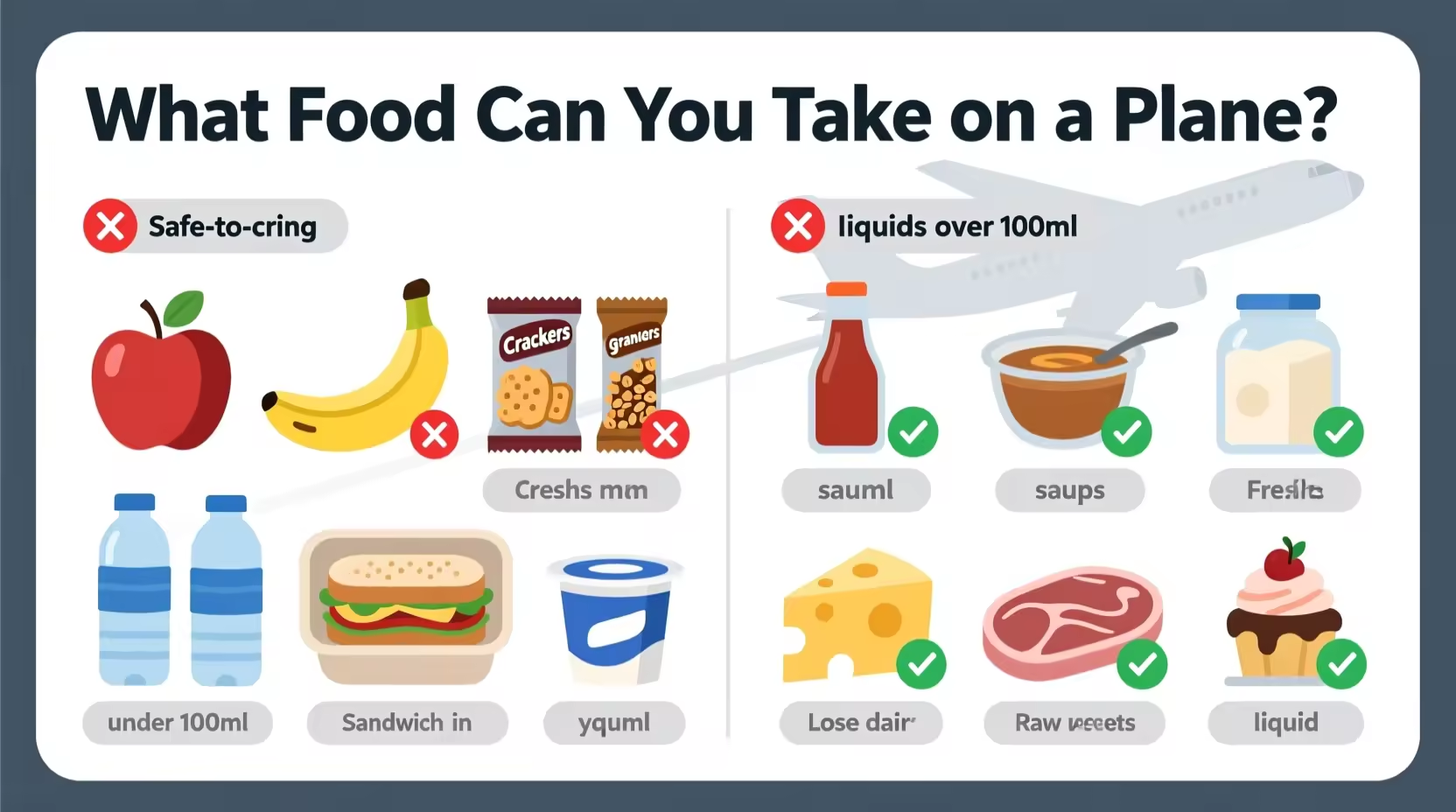
Understanding TSA liquid food examples is one of the easiest ways to avoid losing food at airport security. Most travelers assume liquid means “drink,” but TSA defines liquid food much more broadly—and that’s where people get caught off guard.
This guide clearly explains TSA liquid food examples, why TSA classifies them as liquids, and how to pack food correctly so nothing gets confiscated at the checkpoint.
What TSA Means by “Liquid Food”
Before listing TSA liquid food examples, you need to understand TSA’s definition.
TSA considers a food a liquid if it can:
-
Pour
-
Spread
-
Smear
-
Flow under pressure
If it behaves like this, it falls under the 3.4 oz (100 ml) liquid rule. This definition is the foundation for all TSA liquid food examples.
Also Read :-
- Is Homemade Food Allowed Through TSA
- Can You NOT Bring Food Through TSA
- TSA Rules for Portable Chargers International Flights 2026
- TSA Rules for Lithium Batteries in Carry on 2026
- TSA Rules for Power Banks 2026
- How to Lock Your Luggage So the TSA Doesn’t Break It
- Is TSA PreCheck worth it with 2026 Facial Scans?
Peanut Butter (The Most Famous Example)
Peanut butter is the most well-known TSA liquid food example.
Why TSA bans it in large amounts:
-
It’s spreadable
-
It behaves like a gel
-
It blocks X-ray imaging
Any peanut butter over 3.4 oz in a carry-on will be confiscated. This surprises more travelers than any other TSA liquid food example.
Soup and Broth
Soup is a clear TSA liquid food example.
This includes:
-
Homemade soup
-
Canned soup
-
Broth-based meals
Even thick soup counts as liquid if it can pour. Soup must go in checked bags or meet liquid limits to pass TSA.
Yogurt and Pudding
Yogurt is another common TSA liquid food example.
Why it’s restricted:
-
Spoonable consistency
-
Gel-like texture
-
Hard to screen
Pudding, custard, and similar foods fall under the same TSA liquid food examples category.
Sauces, Gravies, and Dressings
Sauces are classic TSA liquid food examples.
This includes:
-
Pasta sauce
-
Gravy
-
Salad dressing
-
Curry sauce
Even thick sauces are treated as liquids. Containers over 3.4 oz will be taken at security.
Jelly, Jam, and Honey
Many people assume spreads are solid. TSA does not.
These TSA liquid food examples include:
-
Jelly
-
Jam
-
Honey
All are considered gels and must follow liquid rules in carry-on bags.
Hummus and Dips
Hummus is one of the most misunderstood TSA liquid food examples.
Also included:
-
Guacamole
-
Salsa
-
Cheese dip
-
Bean dip
If it spreads or scoops, TSA treats it as a liquid.
Ice Cream and Frozen Foods
Ice cream is a tricky TSA liquid food example.
Rules depend on state:
-
Fully frozen solid → allowed
-
Partially melted → confiscated
Once it starts melting, TSA considers it liquid.
Creamy Foods and Soft Cheese
Cream-based foods fall under TSA liquid food examples.
These include:
-
Cream cheese
-
Ricotta
-
Cottage cheese
-
Mascarpone
Soft cheeses are treated as spreads, not solids.
Baby Food and Liquid Nutrition (Special Case)
Baby food appears on TSA liquid food examples, but with exceptions.
Allowed with declaration:
-
Baby formula
-
Breast milk
-
Baby food pouches
These can exceed liquid limits but must be shown to TSA officers.
Why TSA Restricts Liquid Foods
People often ask why TSA liquid food examples are restricted at all.
The reasons:
-
Liquids are harder to screen
-
Containers block X-ray views
-
Security risks outweigh convenience
This has nothing to do with food safety.
Where TSA Liquid Food Examples ARE Allowed
To avoid issues with TSA liquid food examples:
-
Pack them in checked luggage
-
Keep them under 3.4 oz in carry-on
-
Buy them after security
TSA rules apply only at the checkpoint.
Foods Often Confused With Liquids (But Allowed)
To balance TSA liquid food examples, here are solid foods that usually pass:
-
Sandwiches
-
Bread and rolls
-
Cookies and brownies
-
Chips and crackers
-
Solid chocolate
Texture—not ingredients—matters most.
How to Avoid Losing Food at TSA
To handle TSA liquid food examples correctly:
-
Assume spreads are liquids
-
Put sauces in checked bags
-
Follow the 3-1-1 rule
-
Buy liquids after security
These steps prevent almost all confiscations.
Final Thoughts
Understanding TSA liquid food examples removes the guesswork from airport security. If a food spreads, pours, or smears, TSA treats it like a liquid—no matter how normal it seems.
Pack smart, follow texture rules, and you won’t lose food again. Knowing TSA liquid food examples turns TSA screening from stressful to simple.
Also Read :-
- Is Homemade Food Allowed Through TSA
- Can You NOT Bring Food Through TSA
- TSA Rules for Portable Chargers International Flights 2026
- TSA Rules for Lithium Batteries in Carry on 2026
- TSA Rules for Power Banks 2026
- How to Lock Your Luggage So the TSA Doesn’t Break It
- Is TSA PreCheck worth it with 2026 Facial Scans?