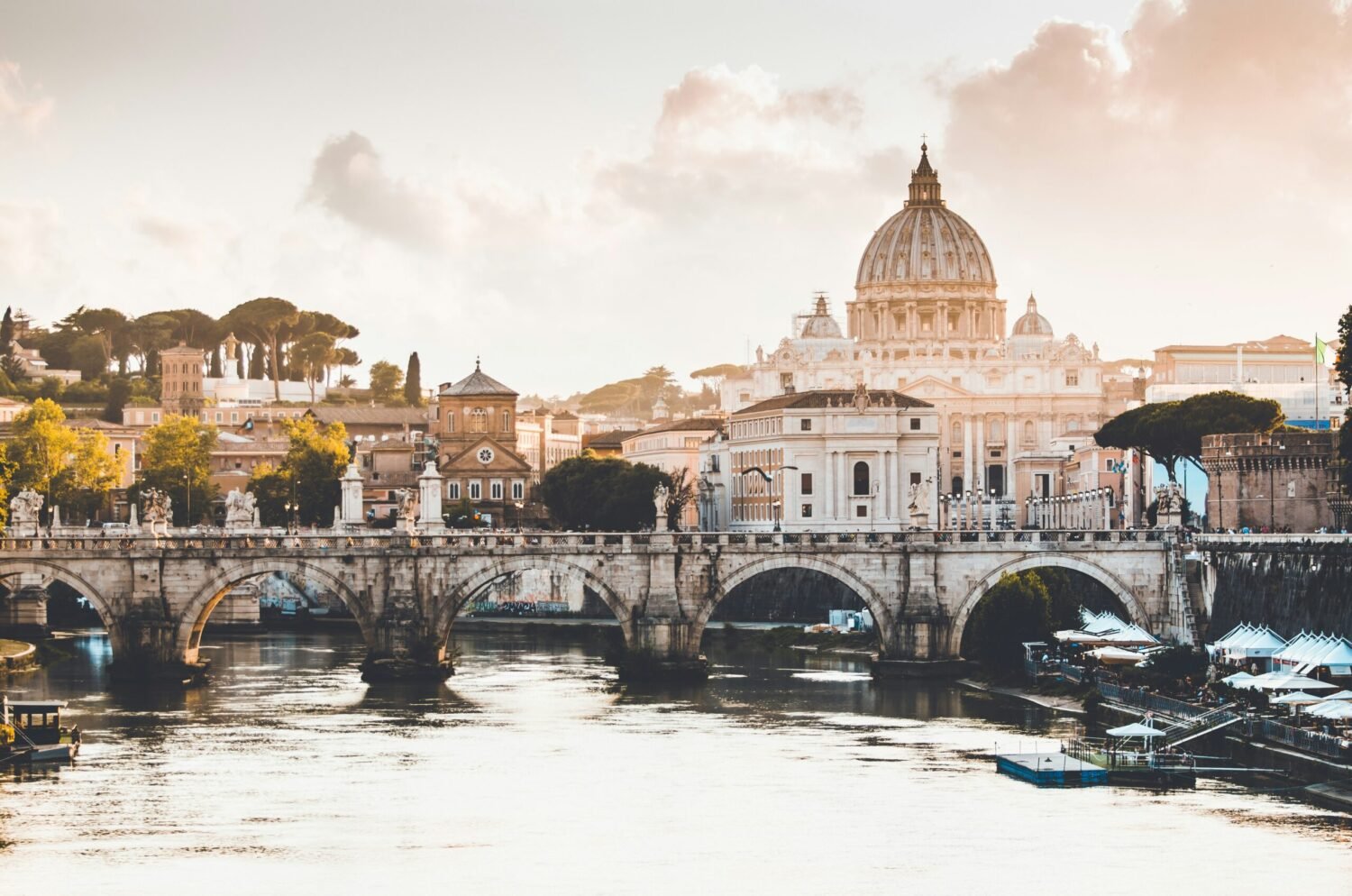
Rome noctourism midnight sites in 2026 are attracting a growing number of travelers who have discovered what experienced Rome visitors have known for years: the Eternal City reveals an entirely different version of itself after dark. The Rome that most tourists experience is daytime Rome — overcrowded, sweltering in summer heat, with every fountain and piazza packed shoulder to shoulder with visitors from around the world. The Rome that exists after midnight is something else entirely. It is quieter, cooler, more atmospheric, and in many ways more authentically beautiful than anything you will encounter during peak daylight hours.
The concept driving this shift is called noctourism — a travel trend that has accelerated significantly in 2026 as travelers actively seek alternatives to the crowded, overheated daytime experience at major European landmarks. Rome is one of the cities where noctourism makes the most compelling case for itself. The Trevi Fountain at 1am, with soft golden light playing on Nicola Salvi’s baroque marble and only a handful of other visitors present, is a genuinely different experience from the same fountain at 2pm surrounded by hundreds of tourists holding phones above their heads. The Colosseum’s ancient stone arches, illuminated against a dark sky with no queue for photographs, reveal details and textures that disappear in the flat midday light.
This is not simply about avoiding crowds, though that is a significant benefit. Nighttime Rome offers a different quality of light, a different pace, a different relationship with some of the most significant historical monuments in the Western world. Walking alone — or nearly alone — through a space like St. Peter’s Square after midnight, with Bernini’s colonnade rising on either side and the square entirely silent, produces a feeling of connection with history that no daytime visit with tour groups pressing on all sides can replicate.
This complete guide covers the best Rome noctourism sites to visit after midnight in 2026, explains exactly what to expect at each location, covers the practical logistics of late-night exploration including transport, safety, and what remains accessible after dark, and gives you everything you need to plan the best possible nighttime Rome experience.
What Is Noctourism and Why Is Rome Perfect For It?
Noctourism — the deliberate choice to explore a city’s landmarks, culture, and atmosphere at night rather than during conventional daytime tourist hours — has been growing as a recognised travel trend since around 2022, but it has reached mainstream travel conversation in 2026 as overtourism, summer heat extremes, and the search for more authentic travel experiences drive travelers to reconsider when they explore.
Rome is one of the world’s most natural noctourism destinations for several interconnected reasons. First, the city’s most iconic outdoor monuments — the Trevi Fountain, the Colosseum, the Pantheon exterior, Piazza Navona, the Spanish Steps, St. Peter’s Square — are all publicly accessible at any hour and are all dramatically illuminated after dark. Unlike indoor museums that close at 6pm, these landmarks are available to nighttime explorers without any special access or cost.
Second, Rome’s summer daytime temperatures have become increasingly extreme. July and August regularly see temperatures above 35°C and sometimes approaching 40°C in the city centre. Walking the cobblestoned streets between the Pantheon and the Colosseum in this heat is genuinely exhausting and detracts significantly from the experience. After midnight, temperatures in the same streets drop to 22 to 26°C — still warm enough to be comfortable in light clothing, but cool enough for relaxed walking and exploration.
Third, Rome’s nighttime lighting design is genuinely exceptional. The city has invested in warm, carefully positioned illumination for its major monuments that creates a golden, atmospheric quality entirely unlike the flat white light of midday sun. Photographs taken at Rome’s illuminated monuments after midnight are consistently more dramatic, more atmospheric, and more memorable than equivalent shots taken in daylight — which is one reason why travel photographers and social media creators have been visiting Rome after midnight for years before noctourism became a mainstream trend.
Rome Noctourism at a Glance: What to Expect After Midnight
| Factor | Daytime Rome | After Midnight Rome |
|---|---|---|
| Crowds at major sites | Extremely heavy in summer | Minimal to none |
| Temperature (July/Aug) | 35 – 40°C | 22 – 26°C |
| Photography quality | Flat midday light, crowded backgrounds | Dramatic golden illumination, clear shots |
| Atmosphere | Chaotic, rushed | Peaceful, magical |
| Cost of access | Paid entry to most sites | Free (outdoor monuments) |
| Safety in central areas | Good | Generally good with precautions |
| Dining and cafe options | Full choice available | Limited but some bars and gelato open late |
Site 1: Trevi Fountain — Rome’s Most Magical Midnight Destination
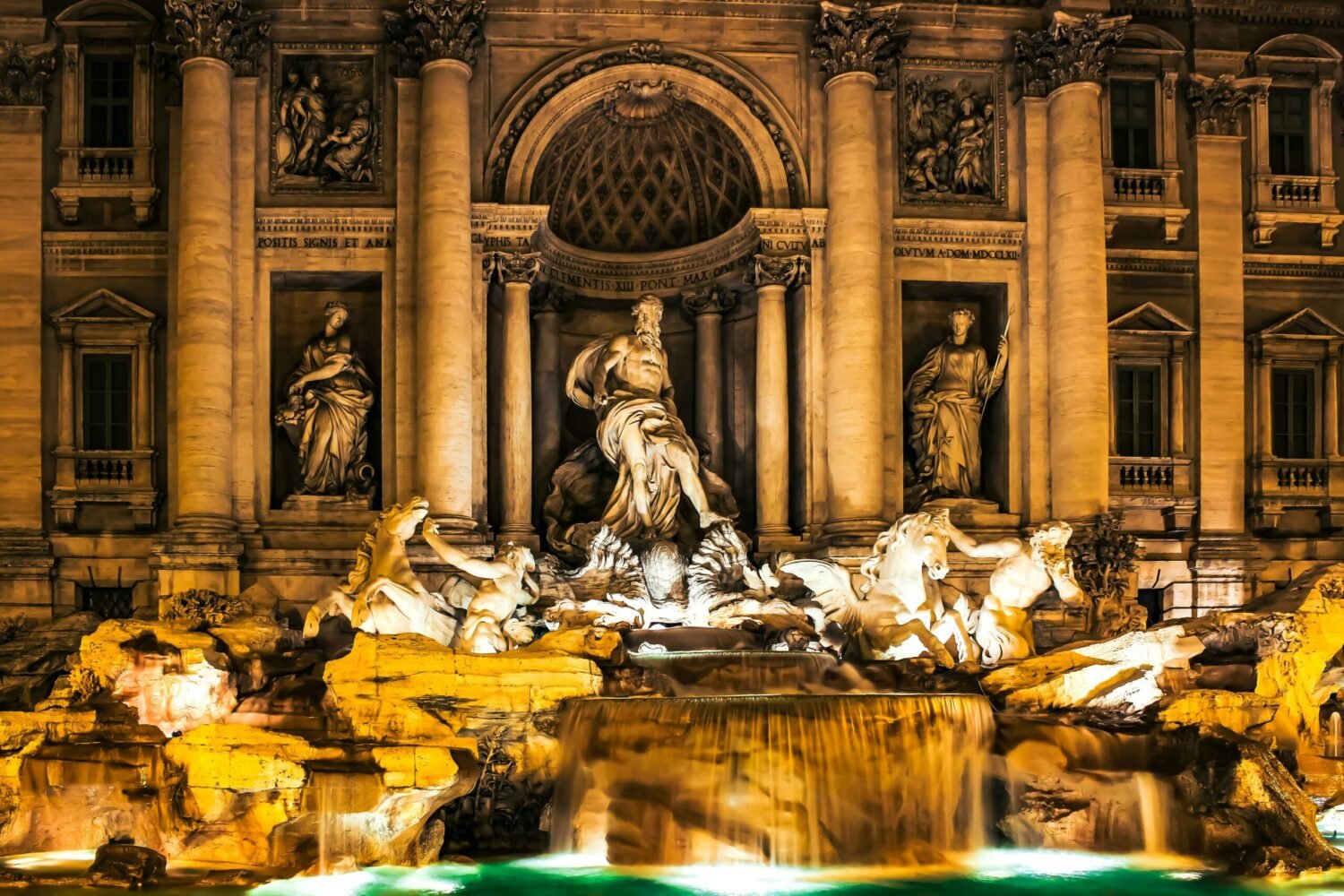
If there is one site in Rome that most perfectly demonstrates the case for noctourism, it is the Trevi Fountain. During the day, particularly in July and August, the area around the fountain is so densely packed with tourists that it is genuinely difficult to approach the basin, impossible to photograph without dozens of strangers in every shot, and the famous sound of cascading water is completely drowned out by the noise of the crowd. The experience is impressive despite the crowds — the scale and beauty of Salvi’s 18th-century baroque masterpiece is undeniable — but it is also frustrating and exhausting.
After midnight, and particularly between 1am and 5am, the Trevi Fountain is a completely different experience. The fountain operates 24 hours a day and is always illuminated. At 1am you might find 10 to 30 other visitors rather than several hundred. You can stand at the edge of the basin. You can hear the water. You can photograph without constantly asking strangers to move. The golden lighting on the white Carrara marble and the dramatic central figure of Oceanus on his chariot creates one of the most beautiful night-time scenes in any city in Europe.
Practical tips for visiting Trevi Fountain at midnight:
- The fountain is accessible 24 hours with no entry fee — simply walk to it
- The surrounding streets have some late-night gelato shops and bars that stay open past midnight, particularly in summer
- The narrow streets approaching the fountain (via della Stamperia, via delle Muratte) are well-lit and generally safe late at night
- A tripod is worth bringing for night photography — the illumination is beautiful but exposure times can be long
- Weekday nights after midnight are significantly quieter than weekend nights when the surrounding bars stay open later
Site 2: The Colosseum — Ancient Grandeur Illuminated Against the Night Sky
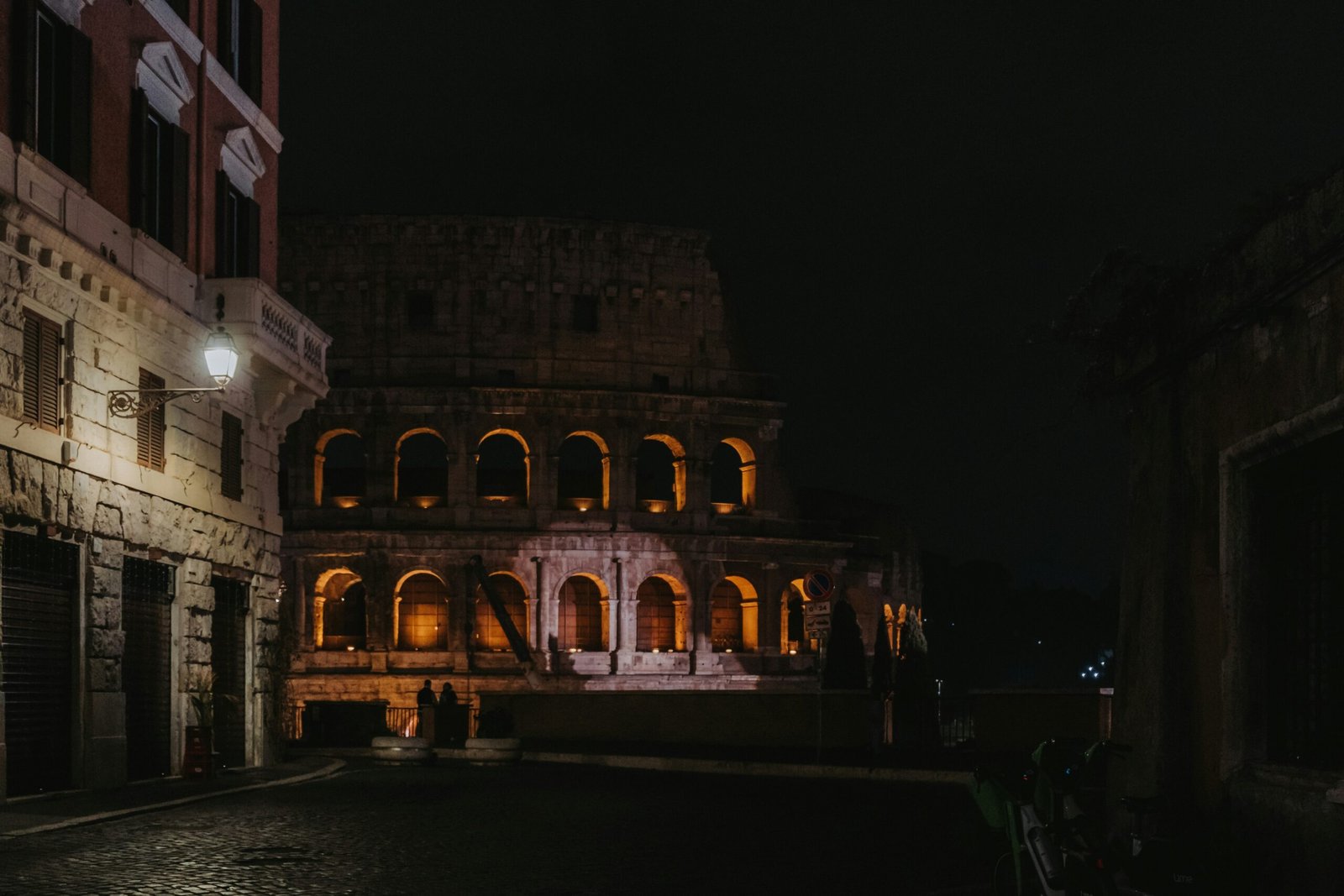
The Colosseum is one of the most recognisable buildings on Earth, and while the interior requires a ticket and daytime or special evening tour access, the exterior of the amphitheatre at night is one of the most impressive free experiences in Rome. The monument is bathed in warm golden lighting that plays across the travertine limestone and brick of the ancient arches in a way that flat daylight simply cannot match. The scale of the structure — 188 metres long, 156 metres wide, 50 metres tall — is somehow more apparent at night when the surrounding area is quieter and you can walk the full perimeter without navigating tourist crowds.
For those who want to experience the interior after dark, ÖBB NightJet does offer special moonlit and night tours through authorised operators — search for “Colosseo by Night” or similar tours through official ticketing platforms. These limited-capacity tours allow small groups into the arena floor and upper levels after the regular closing time, with a very different atmosphere from the daytime experience.
What to do at the Colosseum after midnight:
- Walk the full exterior circuit around the Colosseum — the views from different angles reveal different architectural details
- The Arch of Constantine, directly adjacent to the Colosseum, is equally impressive illuminated at night and almost always empty after midnight
- The Via Sacra leading toward the Roman Forum is accessible and beautiful at night — the ancient paving stones and ruined temples on either side create an extraordinary historical atmosphere
- Palatine Hill above the Forum is not accessible after dark but the panoramic view of its forested slopes rising above the Forum ruins is visible and impressive from the road below
Site 3: Piazza Navona — Rome’s Most Theatrical Midnight Square
Piazza Navona is one of Rome’s most theatrical public spaces at any hour, built on the footprint of the ancient Stadium of Domitian whose oval shape it perfectly preserves. Three fountains anchor the piazza, with Bernini’s Fontana dei Quattro Fiumi — the Fountain of the Four Rivers — dominating the centre with its extraordinary baroque sculptural programme depicting the four great rivers of the world: the Nile, the Danube, the Ganges, and the Río de la Plata.
During the day, Piazza Navona is busy with tourists, street artists, café terraces overflowing with visitors, and the general noise and energy of one of Rome’s most popular tourist squares. Late at night — particularly after the surrounding restaurants and cafés have closed around 11pm to midnight — the piazza transitions into something quieter and more intimate. The three fountains continue to run and remain beautifully illuminated. A few couples sit at the edges of the fountain basins. The baroque façade of Sant’Agnese in Agone church, facing directly onto the piazza, is lit against the dark sky.
Piazza Navona at midnight — what to know:
- Some bars and cafés around the perimeter of the square stay open until 1am or later in summer — useful for a late-night coffee or drink break during your noctourism walk
- The fountain lighting is most dramatic when viewed from the northern end of the piazza looking south, with all three fountains visible in a single frame
- The surrounding streets — particularly toward Campo de’ Fiori to the south — remain lively until late at night and are safe for walking
- Street artists and portrait painters typically pack up by midnight, leaving the square more peaceful
Site 4: The Pantheon Exterior — 2,000 Years of History Under the Stars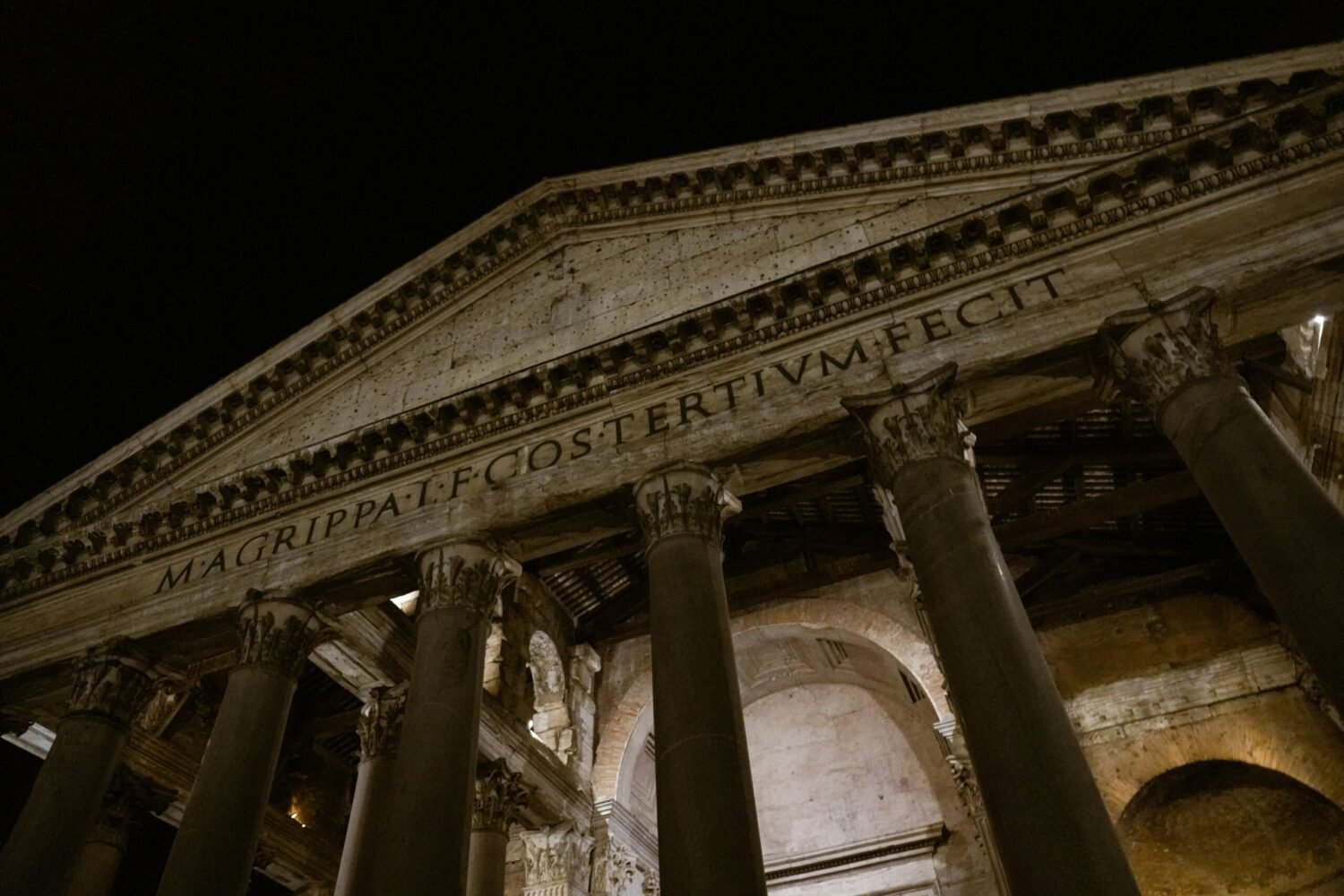
The Pantheon — built by Emperor Hadrian around 125 AD and still the best-preserved ancient building in Rome — is one of the greatest architectural achievements in human history. Its interior, with the famous oculus open to the sky, requires a ticketed entry during daytime hours and for special evening visits. But the exterior of the Pantheon, including the magnificent Corinthian portico of 16 granite columns each 11.8 metres tall, and the perfectly proportioned rotunda behind, is openly accessible at all hours and strikingly illuminated at night.
The Piazza della Rotonda in front of the Pantheon, with its central obelisk fountain, is one of the most charming small squares in central Rome. During the day it is inevitably filled with tourists, café terraces, and street vendors. After midnight, the restaurants and cafés are closed, the vendors are gone, and the piazza is quiet enough to hear the fountain and appreciate the extraordinary scale of the ancient portico above you.
Standing in front of the Pantheon at 1am, looking up at columns that have stood for nearly 1,900 years, with no one between you and the building, is one of the most profound historical experiences available to a traveler in Rome — and it is completely free.
Site 5: Spanish Steps — Peaceful Elegance After Dark
The Spanish Steps — the 135 steps connecting the Piazza di Spagna at the base to the Trinità dei Monti church at the top — are one of Rome’s most famous meeting points and one of its most photographed locations. During the day they are packed, and Rome’s authorities have introduced restrictions on sitting on the steps in recent years to reduce the damage caused by millions of visitors. After midnight, enforcement is minimal and the steps are peaceful enough to sit on and appreciate the view down toward the piazza and the Barcaccia fountain below.
The view from the top of the Spanish Steps at night is one of the most beautiful in central Rome. Looking down the steps toward the Barcaccia fountain and the Via Condotti stretching toward the Tiber beyond, with the buildings on either side of the street illuminated and very few people visible, gives a sense of the city’s beauty and scale that is hard to achieve during the crowded daytime hours.
The surrounding Via Condotti — Rome’s most prestigious luxury shopping street — is equally beautiful at night when the shop windows are still illuminated but the street itself is empty of shoppers. Walking its length after midnight from the Spanish Steps toward the Tiber is one of Rome’s most atmospheric late-night experiences.
Site 6: St. Peter’s Square — Bernini’s Colonnade Under Moonlight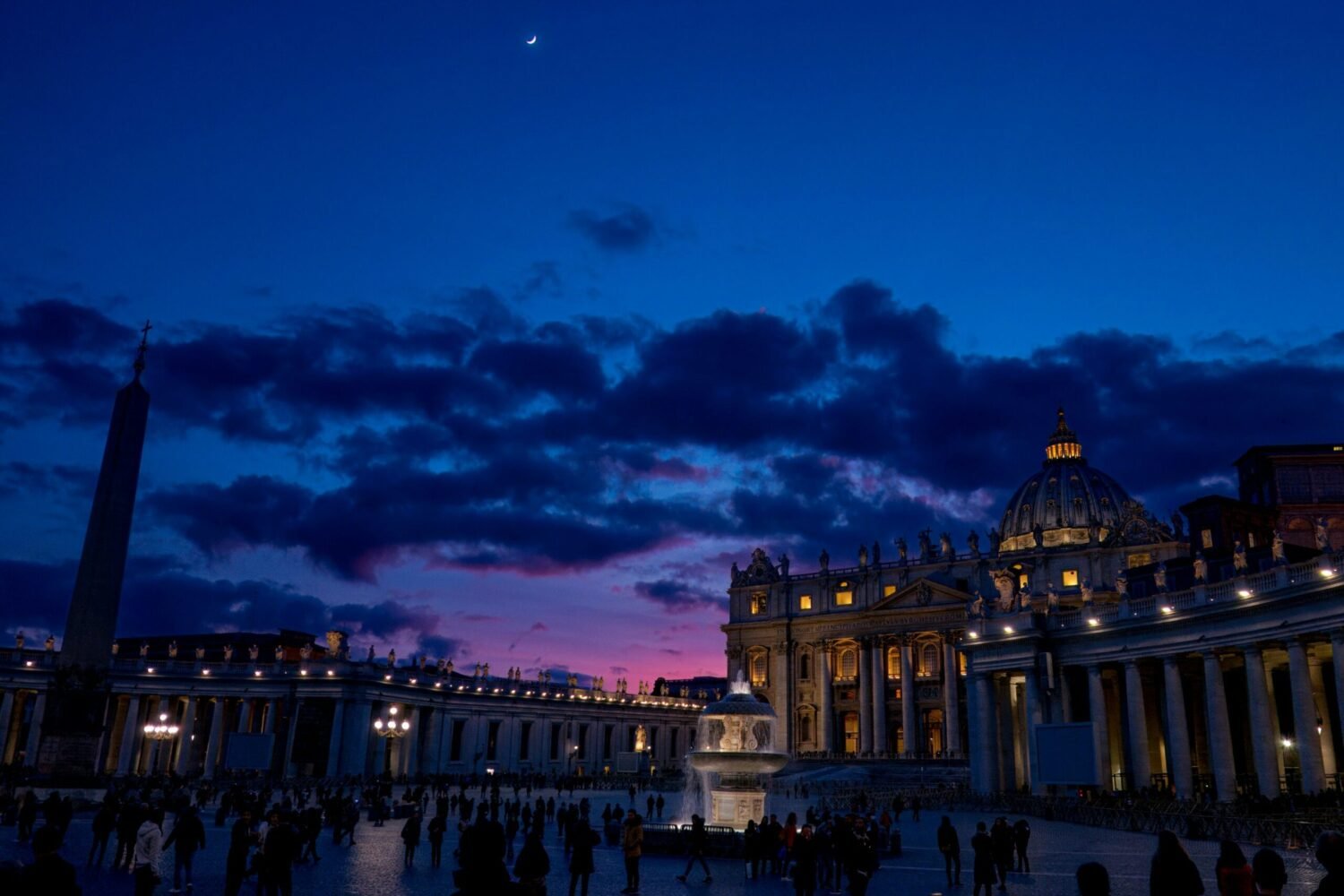
Walking into St. Peter’s Square — the vast oval piazza designed by Gian Lorenzo Bernini and completed in 1667 — after midnight is an experience that produces genuine awe even in travelers who have become accustomed to Rome’s many extraordinary spaces. The square holds up to 300,000 people and during the day it is usually filled with a substantial fraction of that capacity — tour groups, pilgrims, security queues for the basilica, and the general noise and movement of one of the world’s most visited religious sites.
After midnight, St. Peter’s Square is typically nearly empty. The basilica is closed, there are no tour groups, and the colonnades — 284 columns and 88 pilasters arranged in four rows on each side — stand in near-silence under soft lighting. Walking along the inside of the colonnade at 1am, with the Egyptian obelisk and twin fountains in the centre of the square visible between the columns, is one of the most atmospheric architectural experiences in Rome.
Practical notes for St. Peter’s Square after midnight:
- The square itself is freely accessible at all hours — Vatican City’s public spaces are not restricted by time
- Swiss Guards are present at the entrances to the Vatican buildings but do not restrict access to the square
- The walk from Castel Sant’Angelo along the Via della Conciliazione to St. Peter’s Square is beautiful at night — the boulevard is straight, well-lit, and largely empty after midnight
- Castel Sant’Angelo itself is beautifully illuminated and worth viewing from the bridge (Ponte Sant’Angelo) where Bernini’s ten angel sculptures are lit against the dark sky
Site 7: Campo de’ Fiori and Trastevere — Rome’s Living Nightlife Quarter
Not all of Rome’s noctourism experience is about empty monuments and quiet piazzas. Campo de’ Fiori — the square dominated by the brooding statue of philosopher Giordano Bruno, who was burned there as a heretic in 1600 — is one of Rome’s most lively late-night destinations. The bars around the square stay open until 2am or later, the square itself buzzes with a young local and international crowd until well after midnight, and the atmosphere is completely different from the daytime market square.
Trastevere, the neighbourhood west of the Tiber characterised by narrow medieval streets, ochre-coloured buildings hung with trailing plants, and one of Rome’s densest concentrations of restaurants and bars, is equally vibrant late at night. The Basilica di Santa Maria in Trastevere — one of the oldest churches in Rome — is beautifully illuminated on the piazza in front of it, and the piazza itself is a gathering point for locals and visitors until midnight and beyond.
For noctourism that combines monument-viewing with the social energy of Rome after dark, a route that passes from Campo de’ Fiori through Trastevere and across the Tiber via the Ponte Sisto bridge — beautifully lit and pedestrianised — covers some of Rome’s most atmospheric neighbourhoods in a two to three hour walk.
Safety Guide for Noctourism in Rome 2026
Rome is generally a safe city for nighttime exploration in its central tourist areas, and the noctourism sites described in this guide are all in well-lit, frequently visited parts of the city where other people are typically present even after midnight. However, sensible precautions make any late-night urban exploration safer and more enjoyable.
Safety tips for late-night Rome:
- Stick to the well-lit main streets and piazzas described in this guide — the monuments are all in central Rome and connected by safe, busy routes
- Avoid poorly lit side streets, particularly those away from tourist areas — Rome’s street grid can lead you from a busy area to an isolated alley very quickly
- Petty theft — pickpocketing and bag snatching — occurs in Rome at night as well as during the day. Keep bags in front of you, do not leave phones on tables, and be aware of your surroundings in crowded areas like Campo de’ Fiori
- Use official taxis (white cars with the Rome taxi insignia) or ride-hailing apps rather than unofficial drivers who approach you in tourist areas — overcharging and scams are common with unofficial taxis late at night
- Rome’s night bus network operates across the city after the metro closes (around 11:30pm on weekdays, later on weekends). Night bus routes (prefixed with N) connect all major areas and are generally safe and reliable
- Travel with a companion if possible — not because Rome is dangerous, but because a nighttime walk through the city is more enjoyable and more memorable shared
Practical Guide: How to Plan a Rome Noctourism Night
The most effective approach to a Rome noctourism night is to plan a walking route that connects several monuments in sequence, allowing you to move from one to the next on foot through Rome’s beautiful central streets. All of the sites described in this guide are within walking distance of each other, and the routes between them pass through some of the most beautiful streetscapes in the city.
Suggested Rome noctourism walking route (3–4 hours):
- Start at the Trevi Fountain around 11:30pm — still a few people around but quieter than evening
- Walk to the Pantheon (10 minutes) — quiet after restaurants close around midnight
- Continue to Piazza Navona (5 minutes from Pantheon) — enjoy the fountains and late bars
- Walk to Campo de’ Fiori (8 minutes) — lively bar scene until 1am or later
- Cross Ponte Sisto to Trastevere (10 minutes) — neighbourhood energy continues late
- Walk back across the Tiber via Castel Sant’Angelo bridge (20 minutes from Trastevere) — angel sculptures beautifully lit
- Continue to St. Peter’s Square (5 minutes) — arrive around 1:30am for maximum quiet
This route covers approximately 5 to 6 kilometres of walking through central Rome and can be completed in three to four hours at a leisurely pace with time to stop and photograph at each location. Comfortable shoes are essential on Rome’s cobbled streets.
Frequently Asked Questions About Rome Noctourism
Is Rome safe after midnight for tourists?
Central Rome around the main tourist monuments is generally safe after midnight with standard urban precautions. The areas around the Trevi Fountain, Pantheon, Piazza Navona, the Colosseum, and St. Peter’s Square are well-lit and have enough foot traffic even late at night to feel safe. Stick to main streets, keep your belongings secure, and use official taxis or ride apps for transport home.
Are Rome’s monuments accessible after midnight?
All the outdoor monuments described in this guide — Trevi Fountain, Colosseum exterior, Pantheon exterior, Piazza Navona, Spanish Steps, and St. Peter’s Square — are freely accessible at any hour. Indoor sites including the Colosseum interior, Vatican Museums, and Sistine Chapel require tickets and have set opening hours, though some special evening tours are available through authorised operators.
Is public transport available in Rome after midnight?
Yes. Rome’s metro closes around 11:30pm on weekdays and around 1:30am on Fridays and Saturdays. After that, night buses (identified by N-prefixed route numbers) run throughout the night on all major routes. Taxis and ride-hailing services (Uber is available in Rome) also operate 24 hours. Getting back to your hotel from anywhere in central Rome is straightforward at any hour.
What is the best time to visit Trevi Fountain to avoid crowds?
Between 1am and 5am is the quietest window at the Trevi Fountain. Even midnight can still have a moderate number of visitors. The absolute quietest time is around 3 to 4am, but this requires either staying up very late or waking early. For most travelers, arriving at the fountain between 12:30am and 2am offers the best balance of accessibility and low crowds.
Is noctourism suitable for families with children?
A modified version of Rome noctourism works well for families — arriving at major monuments in the early evening (9pm to 10:30pm) rather than true midnight avoids the extreme midday heat and heavy crowds of peak afternoon hours while still offering a significantly improved experience compared to 2pm. True after-midnight exploration is better suited to adult travelers or older teenagers.
Final Verdict: Is Rome Better After Midnight?
For the right traveler at the right time of year, Rome after midnight is genuinely better than Rome at midday. Not in every respect — you cannot enter the Vatican Museums, the Colosseum interior, or the Borghese Gallery at 1am. But for experiencing the atmospheric, historical, and visually extraordinary Rome that lives in the imagination of people who have never visited — the golden fountains, the ancient stone, the quiet piazzas — nighttime is when that Rome reveals itself most completely.
The practical benefits are real: significantly lower temperatures in summer, dramatically reduced crowds at every major site, better photography conditions, and the genuine pleasure of moving through one of the world’s great cities without fighting for space at every corner.
If you are visiting Rome in 2026, particularly in summer, build at least one late-night walk into your itinerary. Start at Trevi Fountain after midnight, walk to the Pantheon, continue through the ancient streets to the Colosseum, and let Rome show you the version of itself that most visitors never see. It is one of the great travel experiences available in Europe — and it costs nothing except the willingness to stay up a little later than usual.