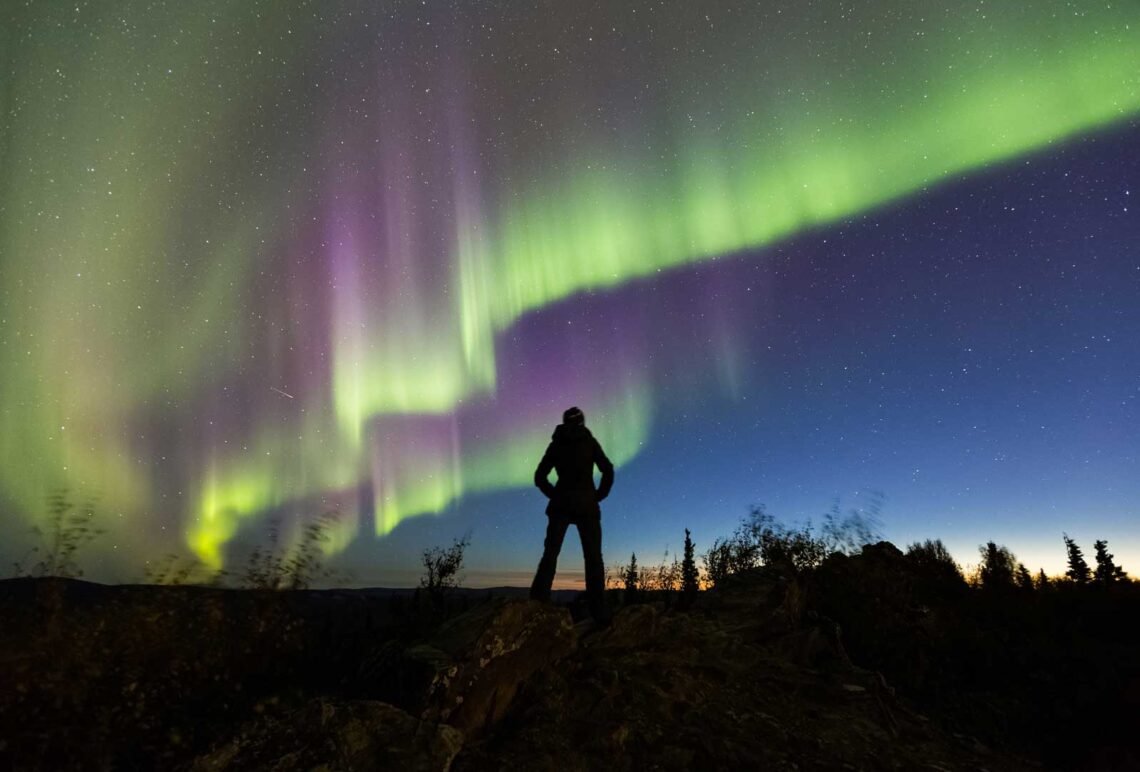
2026 is a once-in-a-generation year for aurora lovers.
Thanks to the Solar Maximum, the Northern Lights (Aurora Borealis) are expected to be stronger, more frequent, and visible farther south than usual — including from multiple cities in the United States.
That means you don’t need to go deep into the Arctic to see the aurora in 2026. Some US cities will have real, visible aurora displays, especially during strong solar storms.
Here’s where to go — and why.
☀️ What Is Solar Maximum (In Simple Words)
The Sun follows an 11-year cycle. During Solar Maximum, the Sun is more active, releasing stronger solar flares and geomagnetic storms.
What that means for travelers:
✔ Brighter auroras
✔ Auroras visible farther south
✔ More frequent aurora nights
✔ Better chances from cities, not just wilderness
2025–2026 is the peak window.
🌌 Best US Cities to See the Aurora During Solar Maximum 2026
🥇 1) Fairbanks — Best in the USA
Why it’s #1:
Fairbanks sits directly under the Aurora Oval, making it the most reliable aurora city in the US.
Why 2026 is special here
-
Strong solar storms = massive aurora displays
-
Long, dark winter nights
-
Clear inland skies
Best months: September – March
Aurora success rate: Extremely high
🥈 2) Anchorage — Easy + Accessible
Why it works:
Anchorage is farther south than Fairbanks, but Solar Maximum makes auroras much more visible here in 2026.
Best viewing areas
-
Kincaid Park
-
Point Woronzof
-
Turnagain Arm
Best for: First-time aurora travelers who want city comfort
🥉 3) Duluth — Lower 48 Favorite
Why it’s special:
During strong solar storms, Duluth often gets clear aurora reflections over Lake Superior.
Why 2026 matters
-
Aurora visibility increases in the Lower 48
-
Cold, clear winter nights
-
Minimal light pollution outside downtown
Best months: October – March
Bonus: Incredible photography opportunities
🌠 4) Marquette — Lake Superior Magic
Why it’s underrated:
Michigan’s Upper Peninsula is one of the darkest regions east of the Rockies.
Why aurora lovers go
-
Open northern horizon over Lake Superior
-
Less cloud cover than many Midwest cities
-
Strong auroras during Solar Maximum storms
Best for: Road-trip aurora chasers
🌌 5) Fargo — Surprise Aurora City
Why it’s trending:
During Solar Maximum events, auroras frequently dip into North Dakota.
Why Fargo works
-
Flat landscapes = wide sky views
-
Low light pollution outside city limits
-
Easy access for Midwest travelers
Best months: September – April
🌃 6) Spokane — Western Dark-Sky Access
Why it’s a sleeper pick:
Eastern Washington has darker skies than the coast, and during Solar Maximum, auroras become visible farther south.
Best viewing
-
Outside city limits
-
Northern horizon
-
During geomagnetic storm alerts
🌲 7) Boise — Rare but Possible in 2026
Why it’s exciting:
Aurora sightings in Idaho are rare — but Solar Maximum changes the rules.
When it happens
-
Only during strong solar storms
-
Best outside the city
-
Clear, cold nights
Best for: Adventurous aurora chasers
🌊 8) Seattle — Yes, It’s Possible
Truth check:
Auroras in Seattle are rare, but Solar Maximum 2026 increases the odds during major geomagnetic storms.
Best strategy
-
Drive north or east
-
Escape city lights
-
Watch space weather alerts closely
🧠 How to Increase Your Chances in 2026
✔ Track KP index (KP 5–7+ for Lower 48)
✔ Watch NOAA aurora alerts
✔ Avoid full moon nights
✔ Get away from city lights
✔ Be patient — auroras don’t run on schedules
✔ Stay at least 3–5 nights
🗓️ Best Months for Aurora Viewing in the US (2026)
🌌 Top months
-
September
-
October
-
February
-
March
🌙 Best hours
-
10:00 PM – 2:00 AM
🏁 Final Thought
Solar Maximum 2026 is a rare opportunity.
It’s one of the best years in decades to see the Northern Lights — even from parts of the continental United States.
If you’ve ever dreamed of seeing the aurora without flying to the Arctic, 2026 is your year.