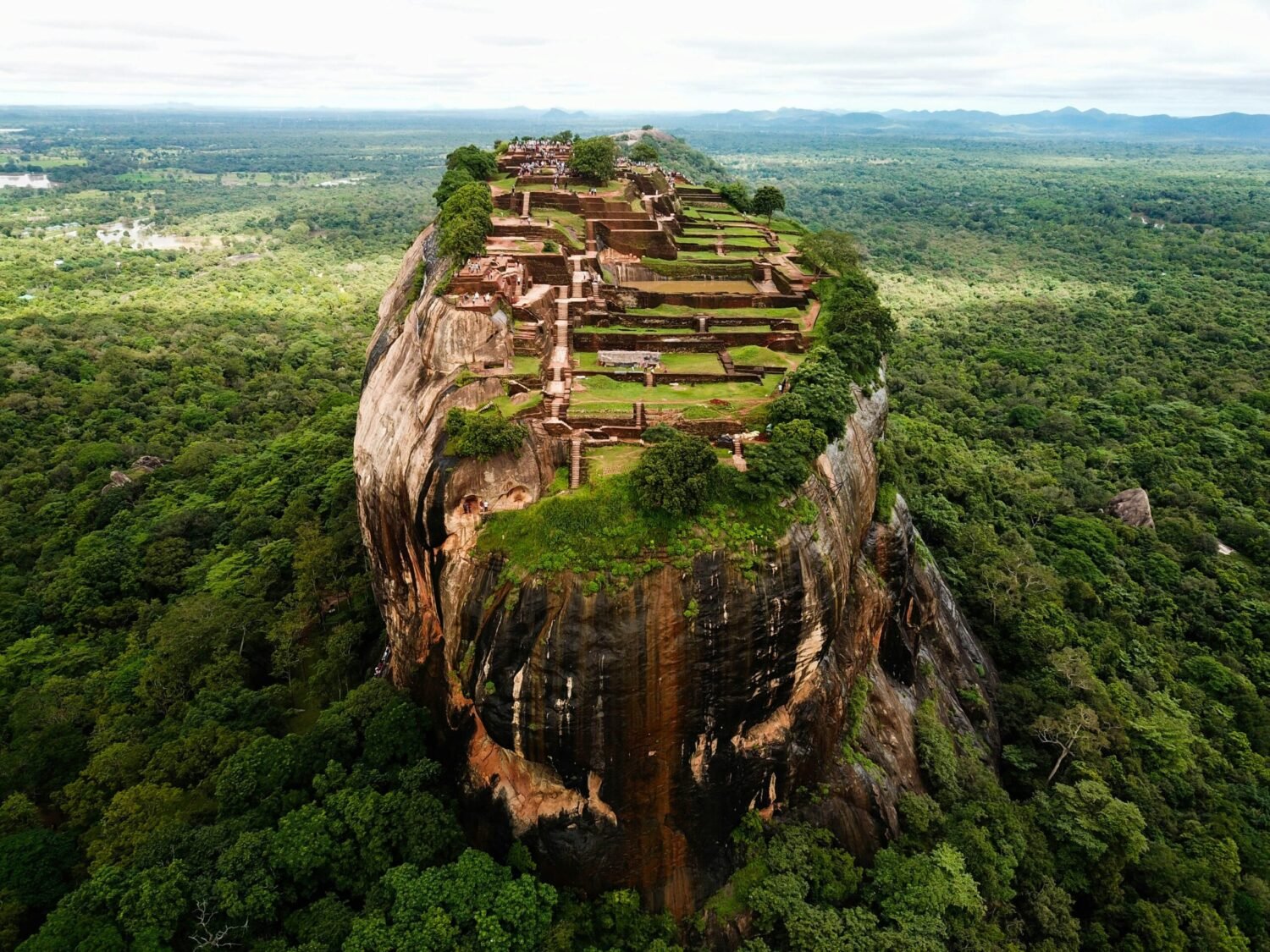
Sri Lanka itinerary 7 days for Indians is one of the most searched travel planning queries in India right now — and it is easy to understand why. Sri Lanka sits less than two hours by air from Chennai, offers a free ETA for Indian passport holders, runs on a currency where ₹1 buys roughly 3.6 Sri Lankan Rupees, shares deep cultural roots with India through Buddhism and Hinduism, and packs beaches, ancient ruins, elephant sanctuaries, scenic train journeys through tea plantations, and colonial-era forts into an island smaller than Tamil Nadu. Seven days is genuinely enough time to experience the very best of Sri Lanka — if you plan the route intelligently.
This guide gives you a complete day-by-day Sri Lanka itinerary 7 days for Indians with real travel costs in rupees, transport options between every location, honest time estimates, food recommendations, entry fees, and the practical details that most itinerary posts leave out. Whether you are planning a honeymoon, a solo trip, a first international holiday, or a group getaway — this is the itinerary.
Before You Travel — Everything Indians Need to Know
Sri Lanka ETA (Visa) for Indians — 2026 Update
Indian passport holders need an Electronic Travel Authorization (ETA) to enter Sri Lanka. The good news is that the Sri Lankan government has waived the ETA fee for Indian nationals as part of a tourism promotion initiative that has been in place since 2023 and is expected to continue through 2026. This means the ETA is currently free for Indian tourists when applied through the official government portal.
| ETA Detail | Information |
|---|---|
| Visa type | ETA (Electronic Travel Authorization) |
| Fee for Indians | Free (apply at eta.gov.lk directly) — third-party agents charge ₹500–₹2,200 for the same |
| Processing time | 24 to 72 hours (apply at least 7 days before travel) |
| Validity | 30 days from date of arrival |
| Entry type | Double entry |
| Extension possible | Yes — extendable up to 180 days at Colombo Immigration office |
| Documents needed | Valid passport (6+ months validity), return ticket, accommodation details, card for payment (if fee applies) |
| Official website | eta.gov.lk/slvisa — use this ONLY, not third-party agents |
Flights from India to Sri Lanka — All Routes and Fares
| Indian City | Flight Time | Round-Trip Fare (Budget) | Airlines |
|---|---|---|---|
| Chennai (MAA) | 1 hr 20 min | ₹8,000–₹14,000 | IndiGo, SriLankan Airlines, Air India |
| Mumbai (BOM) | 2 hr 40 min | ₹10,000–₹18,000 | IndiGo, Air India, SriLankan Airlines |
| Delhi (DEL) | 3 hr 30 min | ₹12,000–₹22,000 | IndiGo, Air India, SriLankan Airlines |
| Bengaluru (BLR) | 2 hr | ₹9,000–₹16,000 | IndiGo, SpiceJet, SriLankan Airlines |
| Kochi (COK) | 1 hr 45 min | ₹8,500–₹15,000 | IndiGo, Air India Express |
| Hyderabad (HYD) | 2 hr 20 min | ₹10,000–₹18,000 | IndiGo, SriLankan Airlines |
| Tiruchirappalli (TRZ) | 1 hr 10 min | ₹7,500–₹13,000 | IndiGo, SriLankan Airlines |
The Best 7-Day Sri Lanka Route for Indians — Why This Order Makes Sense
The most common mistake in Sri Lanka itinerary planning is going in the wrong geographical order — which leads to hours of backtracking, tired travel days, and wasted time on the road. The route in this guide follows a logical anti-clockwise loop from Colombo that minimizes backtracking, connects culturally and scenically related areas, and saves the most spectacular transport experience — the Kandy to Ella train — for the perfect moment in the middle of the trip.
| Day | Location | Distance from Previous Stop | Transport | Overnight |
|---|---|---|---|---|
| Day 1 | Arrive Colombo → Drive to Sigiriya | ~175 km from Colombo | Private car / AC bus | Sigiriya / Dambulla |
| Day 2 | Sigiriya Rock + Dambulla Cave Temple | ~20 km between sites | Tuk-tuk / taxi | Sigiriya |
| Day 3 | Sigiriya → Kandy | ~90 km | Private car / bus | Kandy |
| Day 4 | Kandy + Nuwara Eliya (day trip or transfer) | ~75 km | Car / bus | Nuwara Eliya |
| Day 5 | Nuwara Eliya → Ella (by train) | ~65 km (train journey) | Scenic train — Podi Menike | Ella |
| Day 6 | Ella full day + evening to Galle | ~155 km Ella to Galle | Private car / bus | Galle |
| Day 7 | Galle Fort + return to Colombo airport | ~130 km Galle to Colombo | Highway expressway by car | Departure |
Your Sri Lanka journey begins at Bandaranaike International Airport in Negombo, about 30 km north of Colombo city. On Day 1, the goal is simple: clear immigration, collect luggage, exchange some currency, pick up a local SIM, and head straight to Sigiriya rather than spending a night in Colombo. This saves a full day and positions you perfectly for the most important experience of the trip — Sigiriya Rock Fortress — when you are freshest.
What to Do on Arrival
- Exchange ₹5,000 to ₹8,000 worth of LKR at the airport money changers (rates are acceptable, not great — exchange more later in Kandy or Colombo)
- Buy a Dialog or Mobitel tourist SIM at the airport counter — costs around LKR 500 (~₹140) and includes data
- Download the PickMe app for taxis within cities
- Hire a private car to Sigiriya (3 to 3.5 hours, costs approximately ₹2,500 to ₹3,500 for the full car)
Where to Stay in Sigiriya
Sigiriya and the nearby town of Dambulla have excellent budget and mid-range accommodation options. Budget guesthouses near the rock start at ₹800 to ₹1,200 per night. Mid-range boutique properties cost ₹2,500 to ₹4,500. Check-in, freshen up, and get to bed early — Sigiriya Rock is best climbed before 9 AM to beat the heat and crowds.
Day 2 is the cultural and historical highlight of the entire trip. Sigiriya Rock Fortress is not just a ruin — it is one of the most extraordinary human constructions in Asia. Built in the 5th century CE by King Kasyapa, it is an entire royal palace complex built on top of and carved into a 200-metre tall granite monolith. The UNESCO World Heritage Site receives visitors from across the world, and once you have climbed it, you will immediately understand why.
Sigiriya Rock Fortress — Practical Information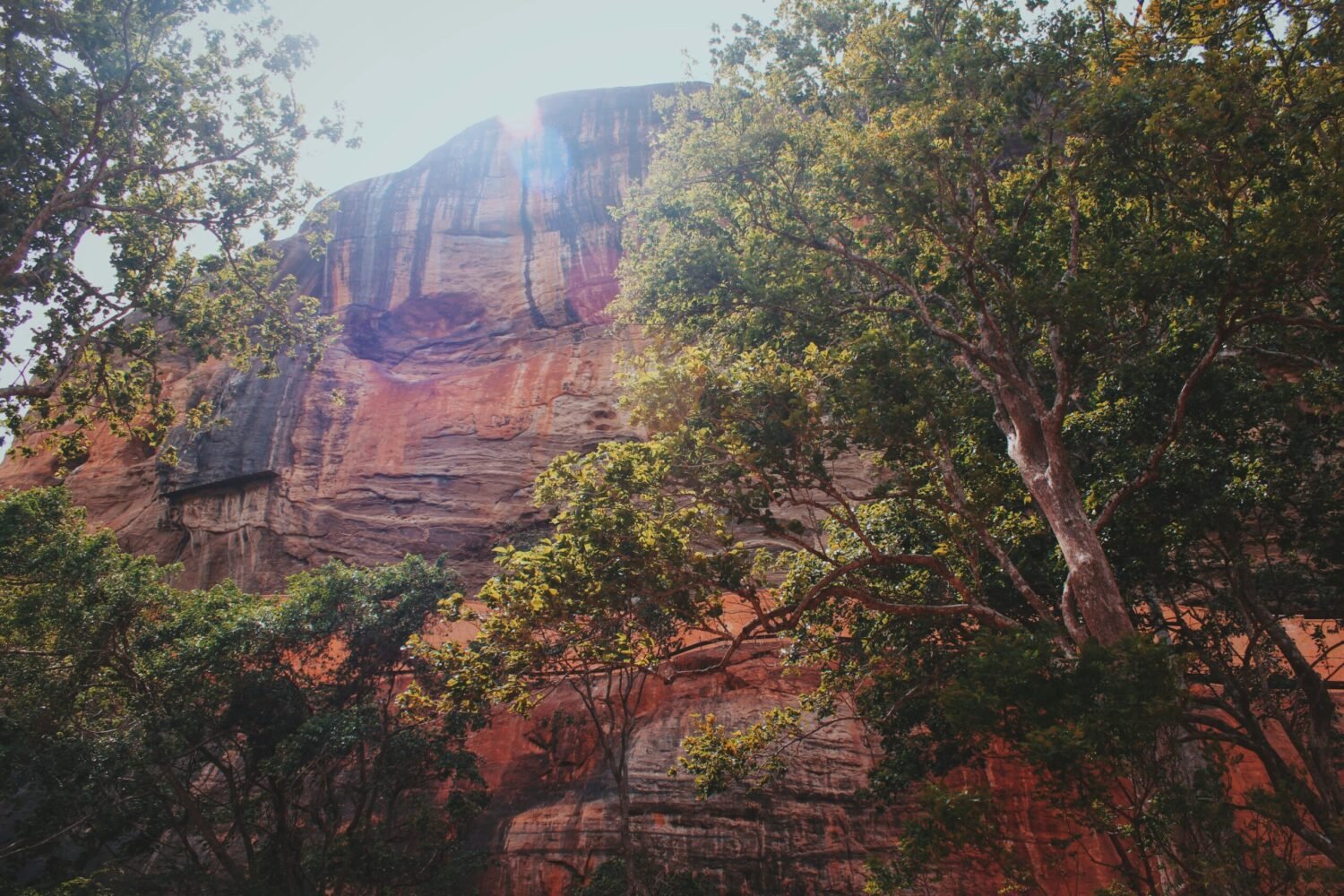
| Detail | Information |
|---|---|
| Entry fee (foreigners including Indians) | USD 30 (~₹2,500) — pay at the gate in LKR or by card |
| Best time to visit | 7:00 AM to 9:00 AM (before heat and crowds) |
| Time required | 2.5 to 3.5 hours including the climb and descent |
| Fitness level needed | Moderate — steep metal staircases near the top, no serious climbing |
| What to see | Ancient frescoes of apsaras (cave paintings), Mirror Wall with 8th-century graffiti, Lion’s Paw platform, summit palace ruins, panoramic views |
| What to carry | Water (at least 1 litre), sunscreen, hat, comfortable shoes — no open footwear on the rock |
Afternoon: Dambulla Cave Temple
After descending Sigiriya and having lunch at a local restaurant (rice and curry for LKR 400 to 700, around ₹110 to ₹200), drive 20 km to Dambulla Cave Temple. The Dambulla Royal Cave Temple is another UNESCO World Heritage Site — a series of five cave temples carved into a hilltop containing 153 Buddha statues, ancient murals covering 2,100 square metres of ceiling and walls, and an atmosphere of extraordinary antiquity and quiet reverence. Entry costs USD 10 (~₹840). The site takes 1 to 1.5 hours to explore comfortably.
The drive from Sigiriya to Kandy takes approximately 2.5 to 3 hours by road through the Matale Valley. This is a beautiful drive through green farmland, small towns, and the first signs of the central highlands. Consider a stop at the Aluvihara Rock Cave Temple in Matale — an ancient monastery where Buddhist scriptures are said to have first been written down on palm leaves in the 1st century BCE. Entry is free, the atmosphere is serene, and it adds cultural depth to what is otherwise a transit day.
Kandy — What to Do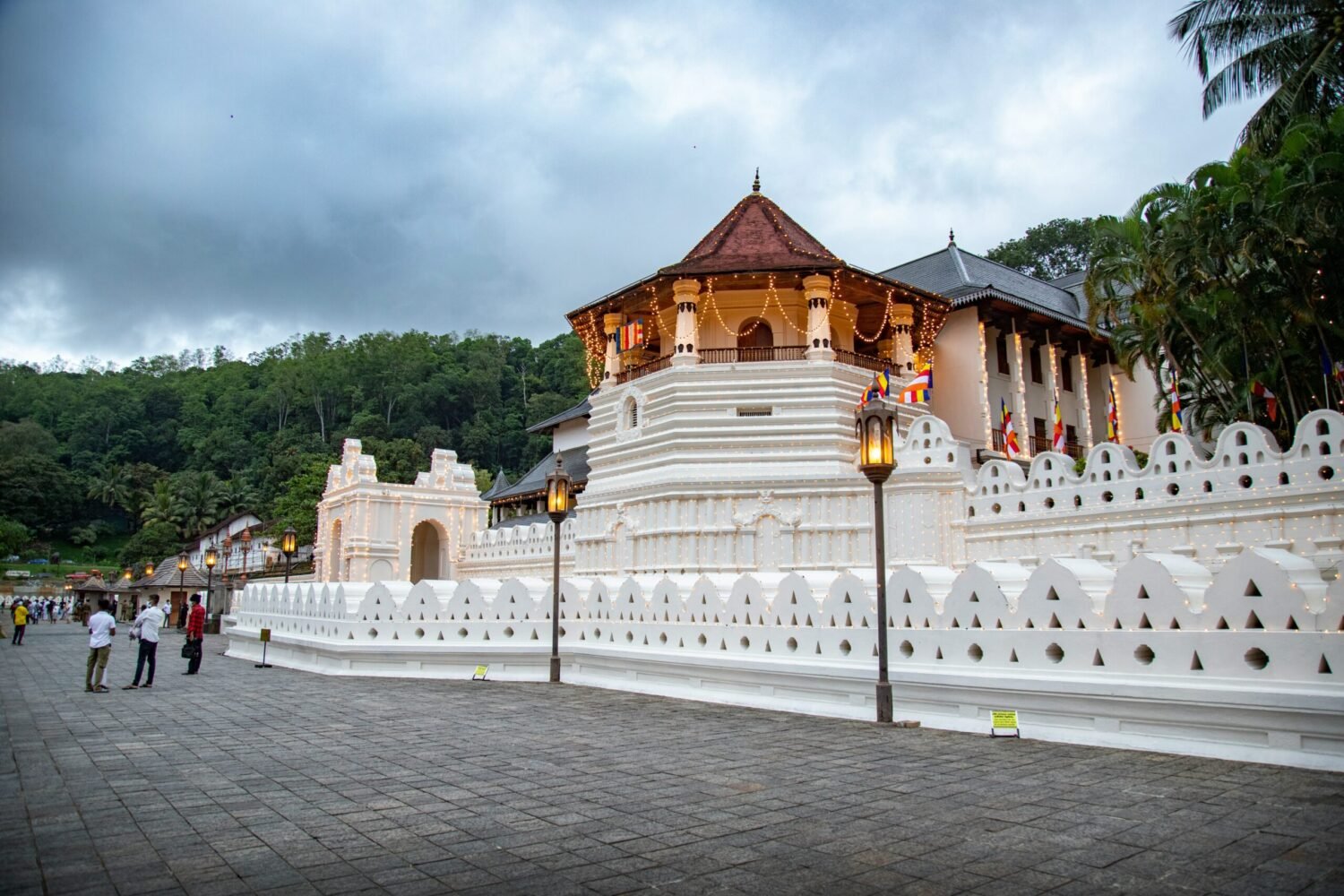
| Attraction | Entry Fee | Time Needed | Notes |
|---|---|---|---|
| Temple of the Sacred Tooth Relic (Dalada Maligawa) | LKR 1,500 (~₹420) | 1–1.5 hours | Most sacred Buddhist site in Sri Lanka — attend the evening Puja ritual at 6:30 PM for the best experience |
| Kandy Lake Walk | Free | 45 min | Peaceful walk around the artificial lake in the city center, beautiful at dusk |
| Royal Botanical Gardens, Peradeniya | USD 15 (~₹1,260) | 2–3 hours | One of Asia’s finest botanical gardens — 60 hectares, 4,000+ plant species, giant Java fig trees, orchid house |
| Kandy Cultural Show | LKR 1,000–1,500 (~₹280–420) | 1 hour | Traditional Kandyan dance and fire-walking performance — touristy but entertaining, held nightly at 5:30 PM |
| Bahiravokanda Vihara (Buddha Statue) | Free | 30 min | Giant white Buddha statue on a hilltop above Kandy — excellent panoramic views of the city and lake |
Kandy is Sri Lanka’s cultural capital and the last royal city of the ancient Sinhalese kingdoms. It sits in a bowl-shaped valley surrounded by green hills, with the sacred lake at its center. The evening Puja ceremony at the Temple of the Tooth — when the inner sanctum opens and the sound of traditional drums fills the air — is genuinely one of the most atmospheric religious experiences available anywhere in Sri Lanka. Do not miss it.
The drive from Kandy to Nuwara Eliya takes 2 to 2.5 hours through some of the most beautiful scenery in Sri Lanka. The road climbs steadily into the central highlands, passing through tea estates that cover every hillside in an impossibly vivid green carpet. Waterfalls appear regularly alongside the road. The temperature drops noticeably as you gain altitude — Nuwara Eliya sits at 1,868 metres and is genuinely cool year-round, earning its old colonial nickname of “Little England.”
What to Do in Nuwara Eliya
| Activity | Cost | Notes |
|---|---|---|
| Pedro Tea Estate tour | LKR 600 (~₹170) | Working tea factory — see withering, rolling, fermenting, drying of Ceylon tea leaves. 45-min guided tour |
| Gregory Lake | Free entry, boat hire LKR 500–1,000 | Beautiful artificial lake in the town center — rent pedal boats, enjoy the colonial-era lakeside park |
| Horton Plains National Park — World’s End | USD 25 (~₹2,100) | Early start essential (5:30–6:00 AM) — hike to World’s End cliff (880m sheer drop) before 10 AM when clouds roll in. 9 km loop trail, takes 3–4 hours |
| Hakgala Botanical Gardens | USD 5 (~₹420) | Smaller than Peradeniya but beautiful — roses, ferns, rhododendrons in a cool highland setting |
| Victoria Park | LKR 300 (~₹84) | Central park in Nuwara Eliya with flowering trees and birdwatching |
Day 5 contains what is widely described as one of the most beautiful train journeys in all of Asia — and it absolutely lives up to that description. The train from Nuwara Eliya (nearest station: Nanu Oya) to Ella travels for approximately 3.5 to 4 hours through the heart of the Sri Lankan hill country, passing through tea estates at their most vivid, over high arched bridges, through mountain tunnels, and past waterfalls visible directly from the window. It is not uncommon for passengers to spend the entire journey leaning out of the open doors at the end of each carriage, watching the landscape unfold.
Train Booking Details — Nanu Oya to Ella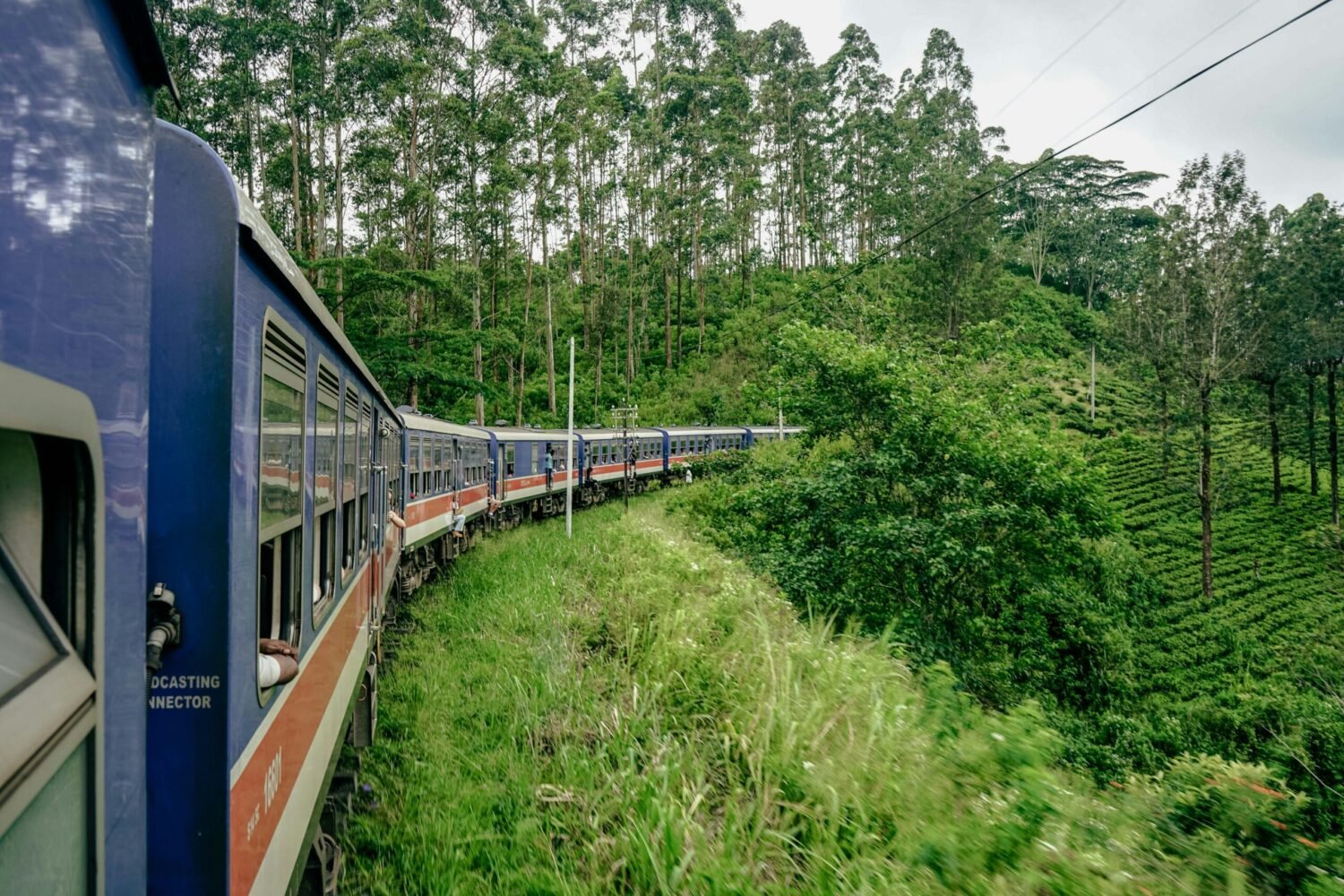
| Detail | Information |
|---|---|
| Station to use | Nanu Oya station (8 km from Nuwara Eliya town — take a tuk-tuk for ~LKR 600) |
| Recommended train | Podi Menike (departs Kandy 8:47 AM, reaches Nanu Oya ~12:30 PM, arrives Ella ~3:30 PM) |
| Ticket class | 2nd class reserved seat — LKR 210 (~₹60). Book in advance at bookme.lk or at Colombo Fort station |
| Observation car | Some trains have an Expo Rail observation car — LKR 2,500–3,000 (~₹700–850) per person, glass-front panoramic views, worth it for photographers |
| Journey time | Approximately 3 to 4 hours (delays of 30–60 minutes are common — factor this in) |
| Best seats | Left side of the train (when traveling from Nanu Oya to Ella) for the most spectacular valley views |
Ella — Afternoon and Evening
Arrive in Ella in the mid-to-late afternoon. Ella is a small hillside town with a single main street, a handful of excellent cafes and restaurants, incredible views in every direction, and an atmosphere that makes most travelers extend their stay. Check into your guesthouse, walk the main street, pick up a cup of fresh Ceylon tea, and watch the sun set over the Ella Gap — the wide valley opening in the mountains that gives the town its defining view.
Morning: Ella’s Best Sights
| Attraction | Cost | Time | Notes |
|---|---|---|---|
| Nine Arch Bridge | Free | 1 hour | Ella’s most photographed sight — colonial-era brick viaduct. Visit early morning (7–9 AM) to watch the train cross. Take the uphill path from the main road near Ella station |
| Little Adam’s Peak | Free | 2–2.5 hours return | Easy hike with tremendous views of Ella Gap and surrounding tea estates. Starts from Zion View restaurant |
| Ravana Waterfalls | LKR 100 (~₹28) | 30 min | Impressive roadside waterfall 6 km from Ella town — easily reached by tuk-tuk (LKR 500 return) |
| Halpewatte Tea Factory | USD 10 (~₹840) | 1 hour | Working tea factory tour — see the entire Ceylon tea production process, sample 4–5 varieties |
| Ella Rock Hike | Free | 3–4 hours return | More challenging than Little Adam’s Peak, spectacular summit views — start early at 6:30 AM |
Afternoon: Transfer to Galle
The drive from Ella to Galle takes approximately 3 to 3.5 hours via the southern expressway and covers around 155 km. Arrange a private car or share a taxi with other travelers — the cost is approximately ₹2,500 to ₹3,500 for the full car one way. Arrive in Galle by evening, check into your accommodation, and spend the evening walking the Galle Fort ramparts as the sun sets over the Indian Ocean. The fort is stunning at dusk.
Morning: Galle Fort
Galle Fort is a 17th-century Dutch colonial fortification on Sri Lanka’s southwestern coast — a UNESCO World Heritage Site and one of the best-preserved colonial forts in Asia. The entire fort area is a living town with cobblestone lanes, colorful Dutch-era buildings converted into boutique hotels, cafes, antique shops, art galleries, and churches. Walking the fort walls at sunrise — when the light is soft and the Indian Ocean glitters on both sides — is one of the quiet highlights of any Sri Lanka trip.
| What to Do in Galle Fort | Cost | Notes |
|---|---|---|
| Fort rampart walk | Free | Full circuit of the fort walls — about 45 minutes at a slow pace, sea views throughout |
| Galle Lighthouse | Free (exterior) | Oldest lighthouse in Sri Lanka, beautiful photo subject |
| Dutch Reformed Church | Free | Built in 1640, oldest Protestant church in Sri Lanka, notable gravestones |
| National Maritime Museum | LKR 300 (~₹84) | Good overview of Sri Lanka’s maritime history inside a Dutch warehouse |
| Pedlar Street | Free | Best street for souvenir shopping — Ceylon tea, linen, batik, gemstones, local crafts |
| Unawatuna Beach (5 km from fort) | Free | Beautiful curved bay — good for a final swim before departure. Tuk-tuk from fort costs LKR 300 |
Return to Colombo for Departure
Galle to Colombo airport is approximately 130 km via the Southern Expressway — one of Sri Lanka’s best highways. The journey takes 1.5 to 2 hours by private car. Allow at least 3 hours before your flight time to account for check-in, immigration, and traffic near the airport. A private car from Galle to Colombo airport costs approximately ₹2,000 to ₹2,800.
Complete 7-Day Sri Lanka Budget for Indians
| Expense Category | Budget Style | Mid-Range Style |
|---|---|---|
| Return flights from India (Chennai/Bengaluru) | ₹8,000–₹12,000 | ₹12,000–₹18,000 |
| ETA visa fee | Free (official portal) | Free |
| Accommodation (6 nights) | ₹4,800–₹8,400 | ₹15,000–₹30,000 |
| Food (7 days) | ₹3,500–₹5,600 | ₹7,000–₹12,000 |
| In-country transport (cars, tuk-tuks, train) | ₹5,000–₹8,000 | ₹10,000–₹16,000 |
| Entry fees (Sigiriya, Dambulla, Tooth Temple, etc.) | ₹7,000–₹9,000 | ₹9,000–₹12,000 |
| SIM card + miscellaneous | ₹500–₹800 | ₹1,000–₹2,000 |
| Travel insurance | ₹600–₹1,000 | ₹1,000–₹2,000 |
| Total (excluding flights) | ₹22,000–₹33,000 | ₹44,000–₹74,000 |
| Total (including flights from Chennai) | ₹30,000–₹45,000 | ₹56,000–₹92,000 |
Best Time to Visit Sri Lanka from India — Month-by-Month Guide
| Month | Weather | Best Region | Crowds/Prices | Verdict |
|---|---|---|---|---|
| December–March | Dry and sunny on west and south coast, cool in hills | Colombo, Galle, Kandy, Ella, Nuwara Eliya | Peak season — highest prices, book ahead | Best overall — this itinerary works perfectly |
| April–May | Transitional — some rain, still manageable | Cultural triangle, hills | Shoulder — moderate prices | Good time — avoids peak crowds |
| June–September | Monsoon on west and south, dry on east coast | East coast (Trincomalee, Arugam Bay) | Low season — cheapest prices | Avoid this itinerary route — adjust to east coast |
| October–November | Inter-monsoon rains, some disruption | Cultural triangle relatively dry | Low-shoulder — good deals | Manageable with flexibility |
Practical Tips Specifically for Indian Travelers in Sri Lanka
1. Indian Rupees Are Not Accepted
Unlike Nepal, Sri Lanka does not accept Indian currency. The Sri Lankan Rupee (LKR) is the only tender. Exchange money at the airport on arrival for immediate needs, then use ATMs throughout the country — Bank of Ceylon and Sampath Bank ATMs work reliably with Indian debit and credit cards. The PickMe taxi app accepts Visa and Mastercard directly, which saves the need for cash for short city rides.
2. Vegetarian Food Is Available But Requires Confirmation
Sri Lankan cuisine is rich and diverse but heavily includes fish and seafood — even dishes that appear vegetarian sometimes contain Maldive fish flakes (dried tuna) used as a seasoning base. Always ask explicitly whether a dish is fully vegetarian. South Indian-style rice and curry restaurants are common in Colombo and Kandy and reliably vegetarian-friendly. Most tourist-facing restaurants in Galle and Ella have good vegetarian menus.
3. Book the Kandy to Ella Train Well in Advance
This is the single most important booking to make as soon as your travel dates are confirmed. The 2nd class reserved seats on the Podi Menike sell out weeks in advance during December to April. Use bookme.lk for online booking or ask your guesthouse in Kandy to help with the in-person booking at Kandy Railway Station.
4. Use PickMe App for City Transport
PickMe is Sri Lanka’s most reliable taxi app, available on both Android and iOS. Download it before you leave India and set up your payment method. Fares are significantly cheaper and more transparent than negotiated tuk-tuk rates — especially in Colombo and Kandy where tourist pricing on street tuk-tuks is common. For shorter distances within Ella or Nuwara Eliya, tuk-tuk negotiation is fine and fares are low.
5. Dress Appropriately for Temple Visits
The Temple of the Tooth in Kandy, the Dambulla Cave Temple, and Aluvihara all require covered shoulders and legs for entry. Women should carry a light shawl or scarf as a wrap. Men in shorts should carry a sarong (available for hire at most major temple entrances). Removing shoes before entering any temple is compulsory — wear slip-on footwear for temple-heavy days.
Final Verdict
The Sri Lanka itinerary 7 days for Indians outlined in this guide is not just a list of places — it is a carefully ordered journey through one of Asia’s most diverse and rewarding destinations. From the vertical drama of Sigiriya Rock to the sacred calm of Kandy’s Tooth Temple, from the cool misty mornings of Nuwara Eliya’s tea country to the world’s most beautiful train journey, from the energy of Ella’s single main street to the timeless colonial elegance of Galle Fort — seven days in Sri Lanka, done right, gives you a complete picture of a country that surprises almost everyone who visits it.
For Indian travelers specifically, Sri Lanka offers something rare: genuine foreignness combined with deep cultural familiarity. The Buddhist and Hindu temples feel connected to home. The food — rice, curry, sambar, coconut — feels like a variation on something already loved. The warmth of Sri Lankan hospitality is genuine. And yet the landscapes, the history, the colonial architecture, and the wildlife are entirely their own.
Plan early, book the Sigiriya entry fee and the train ticket before anything else, apply for your free ETA on the official portal, and go. Sri Lanka earns every rupee you spend getting there.
Frequently Asked Questions
Do Indians need a visa for Sri Lanka in 2026?
Yes — Indian passport holders require an ETA (Electronic Travel Authorization) to enter Sri Lanka. The government fee is currently free for Indian tourists as part of an ongoing tourism promotion scheme. Apply at the official portal eta.gov.lk at least 7 to 10 days before travel. The ETA is valid for 30 days from arrival and allows double entry. Do not use third-party agents — the official portal is free and takes less than 10 minutes.
Is 7 days enough for Sri Lanka?
Seven days is enough to experience the very best of Sri Lanka if your route is planned intelligently. The itinerary in this guide — Colombo to Sigiriya to Kandy to Nuwara Eliya to Ella to Galle — covers the Cultural Triangle, the Hill Country, the scenic train journey, and the southern coast without feeling rushed. If you have 10 days, add Yala National Park for the leopard safari or Trincomalee for the east coast beaches. If you only have 5 days, cut Nuwara Eliya and focus on Sigiriya, Kandy, Ella, and Galle.
What is the best time to visit Sri Lanka from India?
December to March is the best time for the itinerary in this guide — covering the west coast, hill country, and south coast. The weather is dry and pleasant throughout, sea conditions are calm at Galle and Bentota, and mountain visibility in Nuwara Eliya and Ella is at its best. Avoid June to September for this specific route as the southwest monsoon brings heavy rain to these areas. The east coast (Trincomalee, Arugam Bay) is excellent from May to September.
How much does a 7-day Sri Lanka trip cost from India?
A 7-day Sri Lanka trip from India costs approximately ₹30,000 to ₹45,000 per person on a budget (including return flights from Chennai, budget guesthouses, local food, and shared transport) and ₹55,000 to ₹90,000 on a mid-range budget (including return flights from Delhi or Mumbai, 3-star hotels, restaurant meals, and private transfers). Entry fees for major sites like Sigiriya (USD 30) and Horton Plains (USD 25) represent a significant portion of the in-country cost and should be budgeted for in advance.
How do I get from Colombo to Sigiriya?
The most convenient option is a private car hired from Colombo airport, which costs approximately ₹2,500 to ₹3,500 for the full car and takes 3 to 3.5 hours. AC buses run from Colombo Central Bus Stand to Dambulla (connecting to Sigiriya) for LKR 300 to 400 (~₹85 to ₹115) and take 4 to 5 hours. Many travelers arrange airport pickup and Sigiriya transfer as a single package with their guesthouse — often the most hassle-free option.
Is the Kandy to Ella train really worth it?
Yes — without any qualification. The train journey from Nanu Oya (near Nuwara Eliya) or Kandy to Ella is genuinely one of the most beautiful rail journeys in Asia. The route passes through tea estates at their most vivid green, over high arched bridges above forested valleys, through mountain tunnels, and past waterfalls visible directly from the window. Even travelers who do not typically seek out train journeys consistently rate this as one of the highlights of their entire Sri Lanka trip. Book a 2nd class reserved seat in advance at bookme.lk.
What food should Indians try in Sri Lanka?
Sri Lankan cuisine shares roots with South Indian cooking but has its own distinct identity shaped by Dutch, Portuguese, and British colonial influence. Must-try dishes include rice and curry (the national staple — a spread of five to eight small curries served around a mound of rice), kottu roti (shredded flatbread stir-fried with vegetables and egg — sold at street stalls everywhere), hoppers (bowl-shaped fermented rice flour pancakes), string hoppers (steamed rice flour noodle discs served with coconut sambal and curry), and fresh king coconut water (thambili) — sold from roadside carts for LKR 60 to 100. Ceylon tea tasted at source in Nuwara Eliya or Ella is an experience in itself.