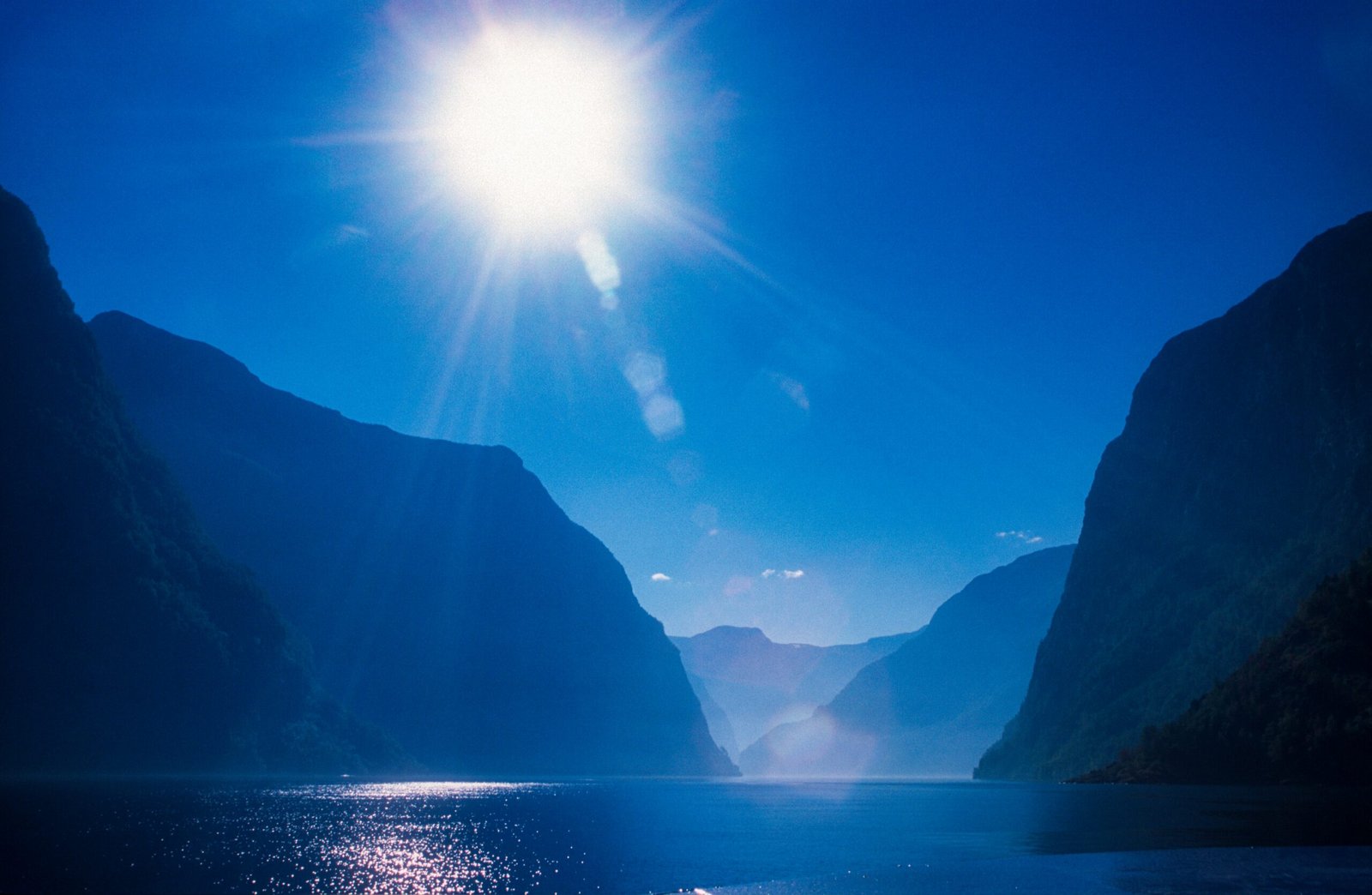
 Coolcation Norway June 2026 is one of the most searched travel combinations in Europe right now — and if you have been watching flight prices to Scandinavia lately, you already know why. While the rest of the continent is bracing for another summer of record-breaking heat, overcrowded beaches, and exhausting tourist queues, a growing number of travelers are doing something unexpected: flying north instead of south.
The term “coolcation” — a vacation deliberately chosen for its cool temperatures rather than beach weather — has moved from a niche travel trend into mainstream travel planning in 2026. And Norway, with its dramatic fjords, endless June daylight, world-class hiking trails, and temperatures that stay comfortably between 15 and 22 degrees Celsius while southern Europe bakes above 38, has become the coolcation capital of Europe.
This is not simply about escaping heat. The travelers heading to Norway in June 2026 are choosing a fundamentally different kind of summer experience — one built around midnight sun kayaking, fjord cruises past thundering waterfalls, hiking to the edge of Preikestolen cliff 604 metres above a mirror-still fjord, and sitting in a Bergen cafe at 11pm with golden sunlight still streaming through the windows. It is the kind of summer that southern European beach holidays simply cannot replicate.
This complete guide explains exactly why Norway has become Europe’s leading coolcation destination in 2026, what the coolcation trend actually means for how people are choosing to travel, and everything you need to plan a Norway June trip — from the best cities and experiences to costs, practical tips, and what to realistically expect when you arrive.
What Is a Coolcation? The Travel Trend Reshaping Summer 2026
A coolcation is exactly what it sounds like: a vacation to a destination chosen specifically for its cool climate, taken during the summer months when heat-seekers are heading in the opposite direction. The concept has existed informally for years, but it entered mainstream travel vocabulary around 2023 and has been growing rapidly since.
The drivers behind the coolcation trend in 2026 are well documented. Southern European summers have become increasingly extreme — July and August temperatures in Spain, Italy, Greece, and Portugal regularly exceed 38 to 42 degrees Celsius, with some regions experiencing dangerous heat events that make outdoor sightseeing genuinely unpleasant or even unsafe for elderly travelers, families with young children, and anyone not acclimatised to intense heat.
At the same time, overtourism has reached crisis point at many Mediterranean destinations. Venice has introduced day-tripper entry fees. Barcelona’s residents have protested against mass tourism. Santorini has capped cruise ship arrivals. The “dream” summer destinations have become crowded, expensive, and exhausting in a way that contradicts the very point of a holiday.
Coolcation destinations offer the opposite experience: comfortable outdoor temperatures ideal for walking, hiking, and exploring; natural landscapes that are genuinely spectacular rather than Instagram-overcrowded; and a pace of travel that feels like a holiday rather than an endurance test.
Norway checks every single one of these boxes in June — and then adds the midnight sun, which gives travelers something no Mediterranean destination can offer: a summer with almost no darkness at all.
Norway in June: Weather, Temperature and What to Expect
The climate is the foundation of Norway’s coolcation appeal, and understanding what the weather is actually like in different parts of the country in June helps set realistic expectations for your trip.
| City / Region | Average June Temperature | Daylight Hours | Special Feature |
|---|---|---|---|
| Oslo | 18 – 22°C | 18 – 19 hours | Warmest Norwegian city in summer |
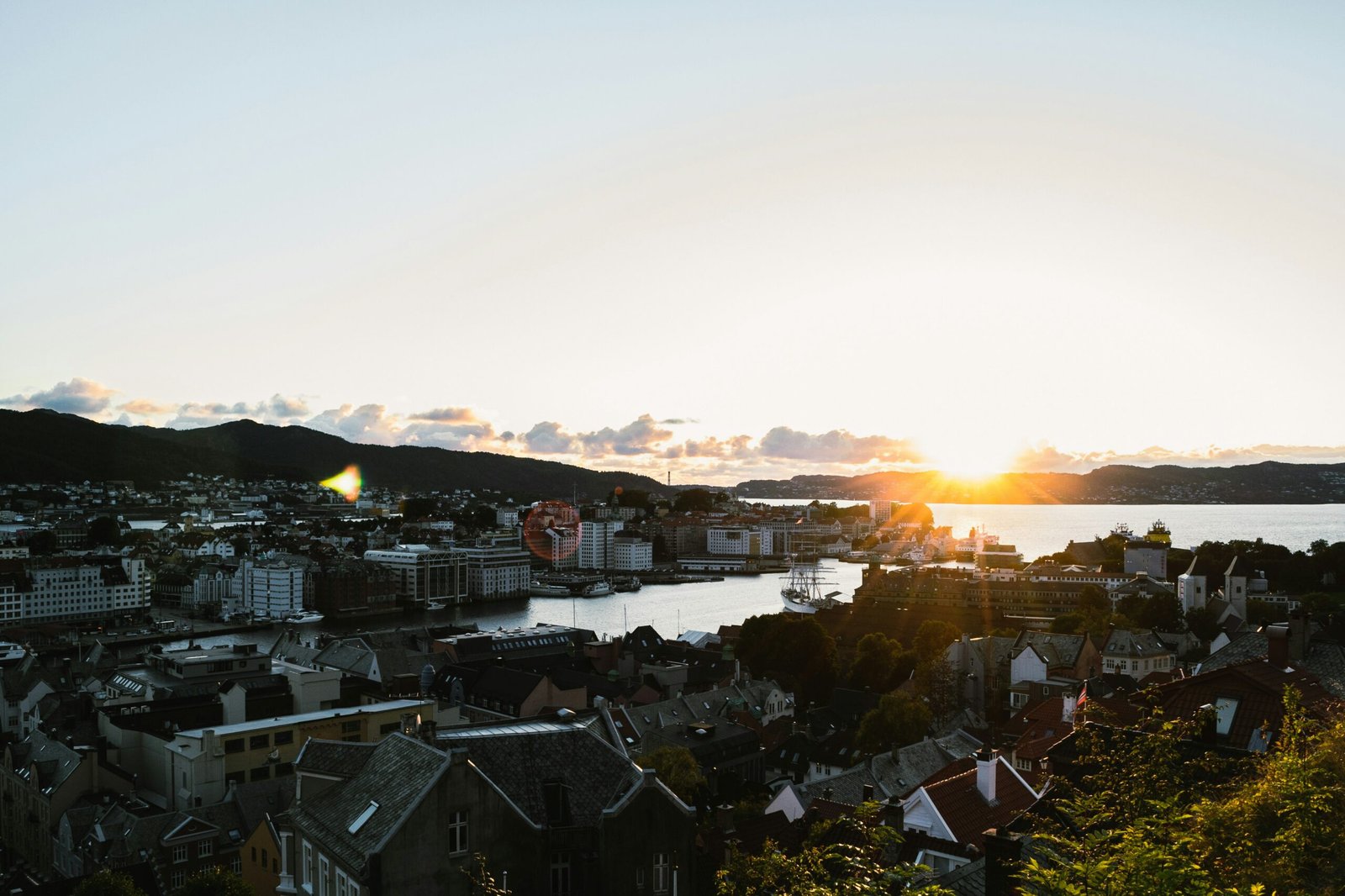
| Bergen | 16 – 20°C | 18 – 20 hours | Gateway to the fjords |
| Flåm / Sognefjord | 16 – 21°C | 19 – 20 hours | Peak waterfall season from snowmelt |
| Tromsø | 10 – 15°C | 24 hours (midnight sun) | Midnight sun from late May to late July |
| Lofoten Islands | 11 – 16°C | 24 hours (midnight sun) | Most dramatic Arctic scenery |
Compare these temperatures with what June looks like in popular Mediterranean destinations. Rome averages 28 to 32°C in June. Athens reaches 30 to 35°C. Barcelona typically sits between 24 and 29°C with high humidity. The Canary Islands push past 27°C. For travelers who find sustained heat exhausting — particularly when trying to walk, hike, or explore cities on foot — Norway’s June temperatures are not just cooler, they are genuinely ideal for active outdoor travel.
It is worth noting that Norway in June can also bring rain, particularly in Bergen and along the western fjord coast. Bergen is one of Europe’s rainiest cities and a light waterproof jacket is essential regardless of season. However, the rain in Norway tends to come in short bursts rather than sustained grey days, and the landscape after rain — with waterfalls swollen by fresh rainfall and the fjords glassy and reflective — is arguably more beautiful than in dry conditions.
The Midnight Sun: Norway’s Most Extraordinary June Experience
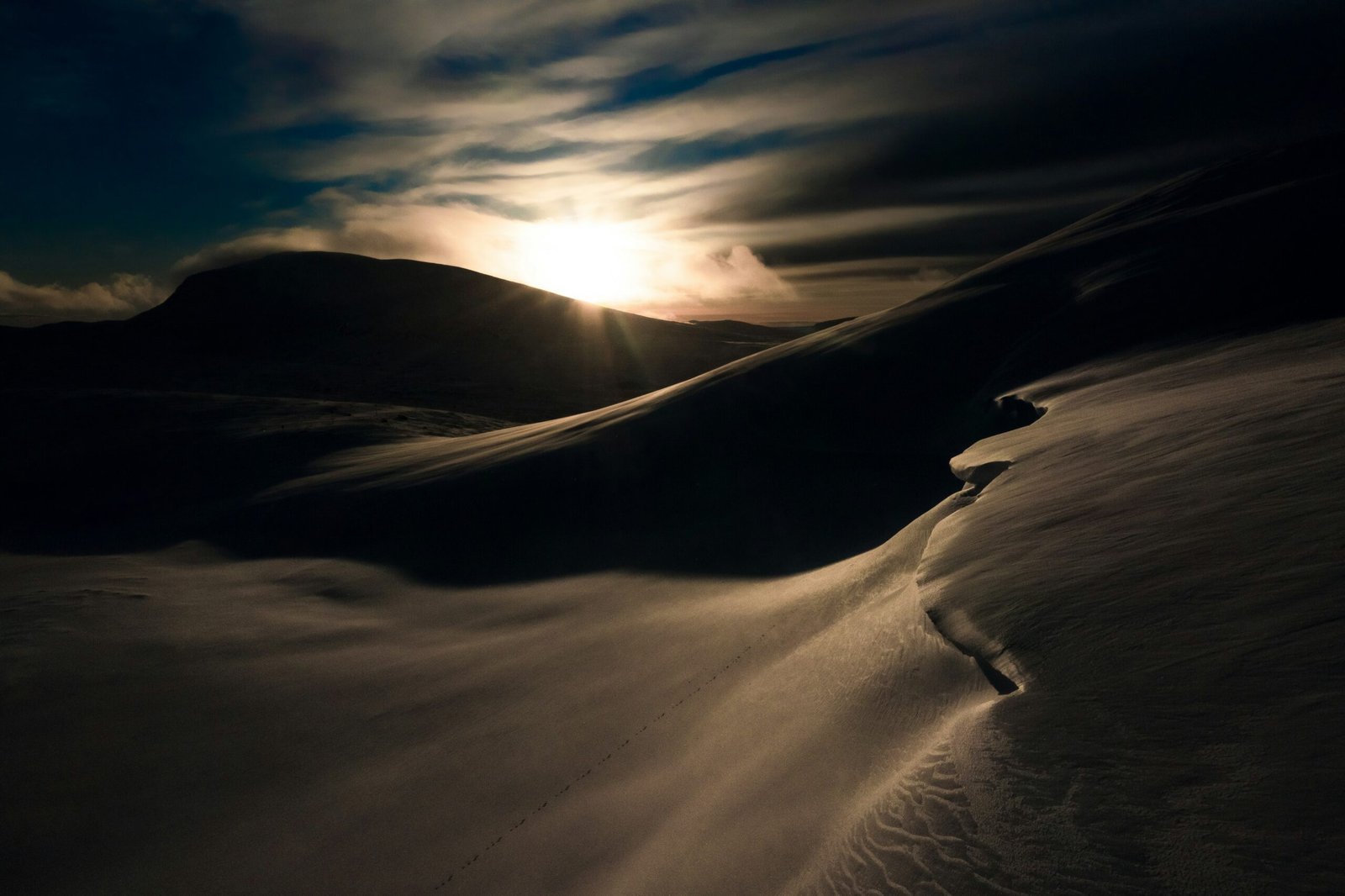 If there is one experience that defines a June trip to Norway above all others, it is the midnight sun — and it is genuinely one of the most unusual and affecting natural phenomena that any traveler can experience in Europe.
Above the Arctic Circle, which runs through northern Norway approximately at the latitude of Bodø, the sun does not set at all during the peak summer weeks around the June solstice. In Tromsø, the midnight sun runs from late May through to late July. In the Lofoten Islands, you have 24-hour daylight throughout June. Even in cities south of the Arctic Circle like Bergen and Oslo, the sun sets for only a few hours around midnight, creating evenings of extraordinary golden light that photographers travel from around the world to capture.
The practical effect of the midnight sun on travel is profound. You are never limited by darkness — hiking trails that would need to be completed by late afternoon in other destinations can be started at 8pm. A kayaking session that begins at 10pm unfolds under a sky of amber and gold. Arriving at the summit of a mountain to watch the “sunset” at 1am and then seeing the sun barely dip before rising again is an experience that genuinely reorders your sense of how time and nature work.
There are practical considerations. The midnight sun disrupts sleep for many travelers, particularly in the first few nights, as the body’s circadian rhythms struggle to process daylight at 2am. Good blackout curtains or a quality sleep mask are essential kit for any Norway June trip. Most Norwegian hotels in affected areas provide blackout blinds, but it is worth checking before you book.
The payoff, however, is enormous. The midnight sun is not something you can experience in southern Europe, Southeast Asia, or any beach destination. It is uniquely Arctic, uniquely Norwegian, and completely unlike anything else in European travel.
Norway’s Fjords in June: The Best Time to Visit
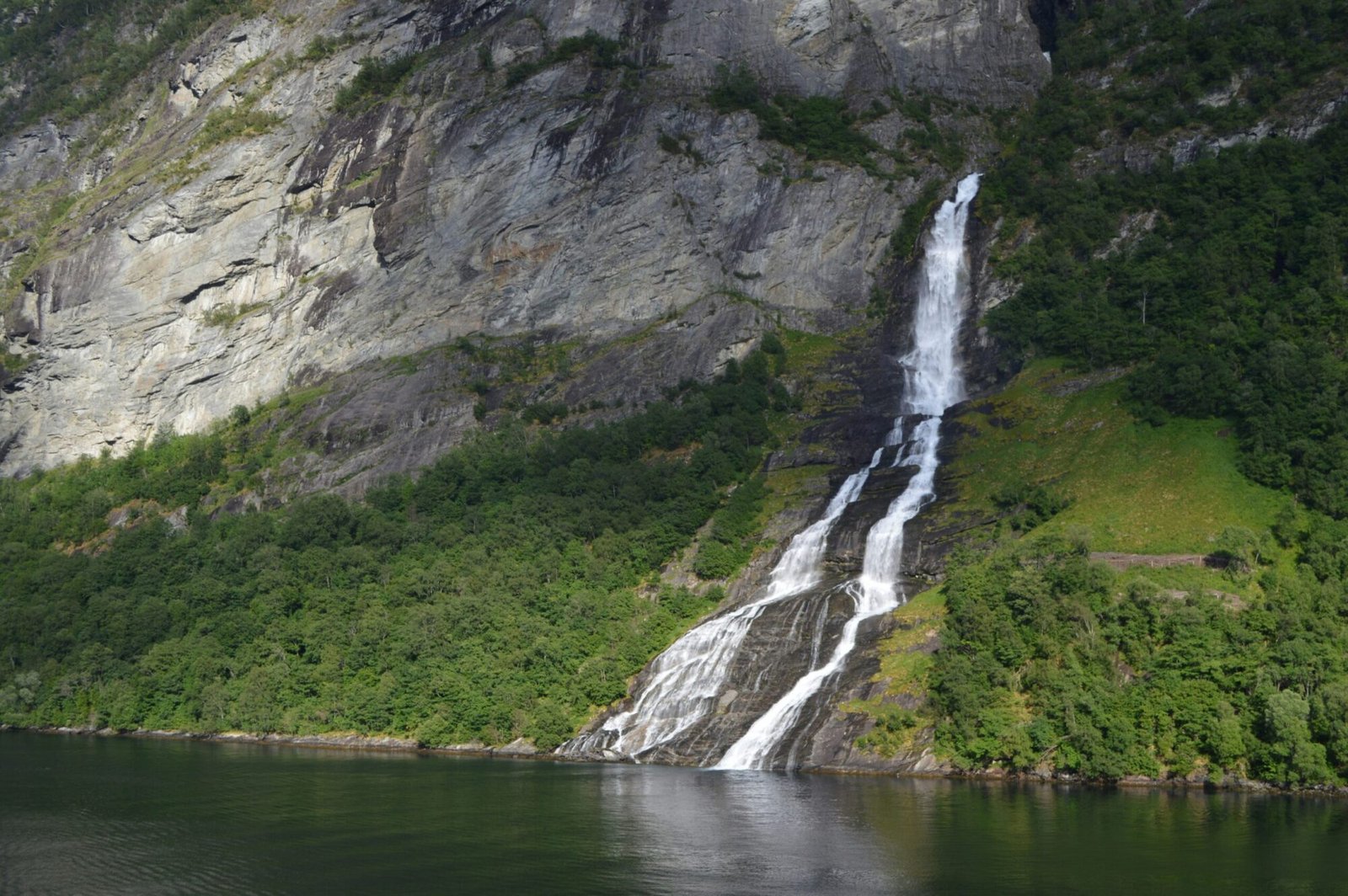
Norway’s fjords are among the most spectacular natural landscapes on Earth — and June is arguably the single best month to see them. Here is why: the snowmelt from the mountains above the fjords reaches its peak in late May and June, which means the waterfalls cascading down the fjord walls are at their most powerful and dramatic. The famous Seven Sisters waterfall on the Geirangerfjord, for example, runs with maximum force in June, creating a wall of white water that is genuinely breathtaking from a cruise ship or kayak below.
The best fjord experiences in June:
- Geirangerfjord — a UNESCO World Heritage site and one of Norway’s most dramatic fjords. Cruise ships and smaller ferry services run daily in summer, passing the Seven Sisters waterfall and the Suitor waterfall on opposite walls. The village of Geiranger itself is tiny and beautiful, with mountain viewpoints above the fjord that rank among the finest viewpoints in Europe.
- Nærøyfjord — the narrowest fjord in Norway and another UNESCO site, best experienced by kayak or the famous Flåm-to-Gudvangen ferry that takes passengers deep into the canyon-like fjord walls. At points the walls rise over 1,200 metres on either side of a fjord barely 250 metres wide.
- Sognefjord — Norway’s longest and deepest fjord, stretching 204 kilometres inland from the coast. The Flåm Railway at its eastern end is one of the world’s most scenic train journeys and a highlight of any Norway visit.
- Hardangerfjord — known as the fruit fjord because the farms along its banks are in full bloom in June, with apple and cherry blossoms creating an extraordinary contrast against the snowy peaks above. Significantly less visited than the more famous fjords.
Fjord cruises and ferry services operate daily throughout June, and the long daylight hours mean you can take evening cruises that run until 10 or 11pm in full golden light — an experience that summer visitors to Mediterranean destinations simply cannot replicate.
Hiking in Norway in June: The Season’s Best Trails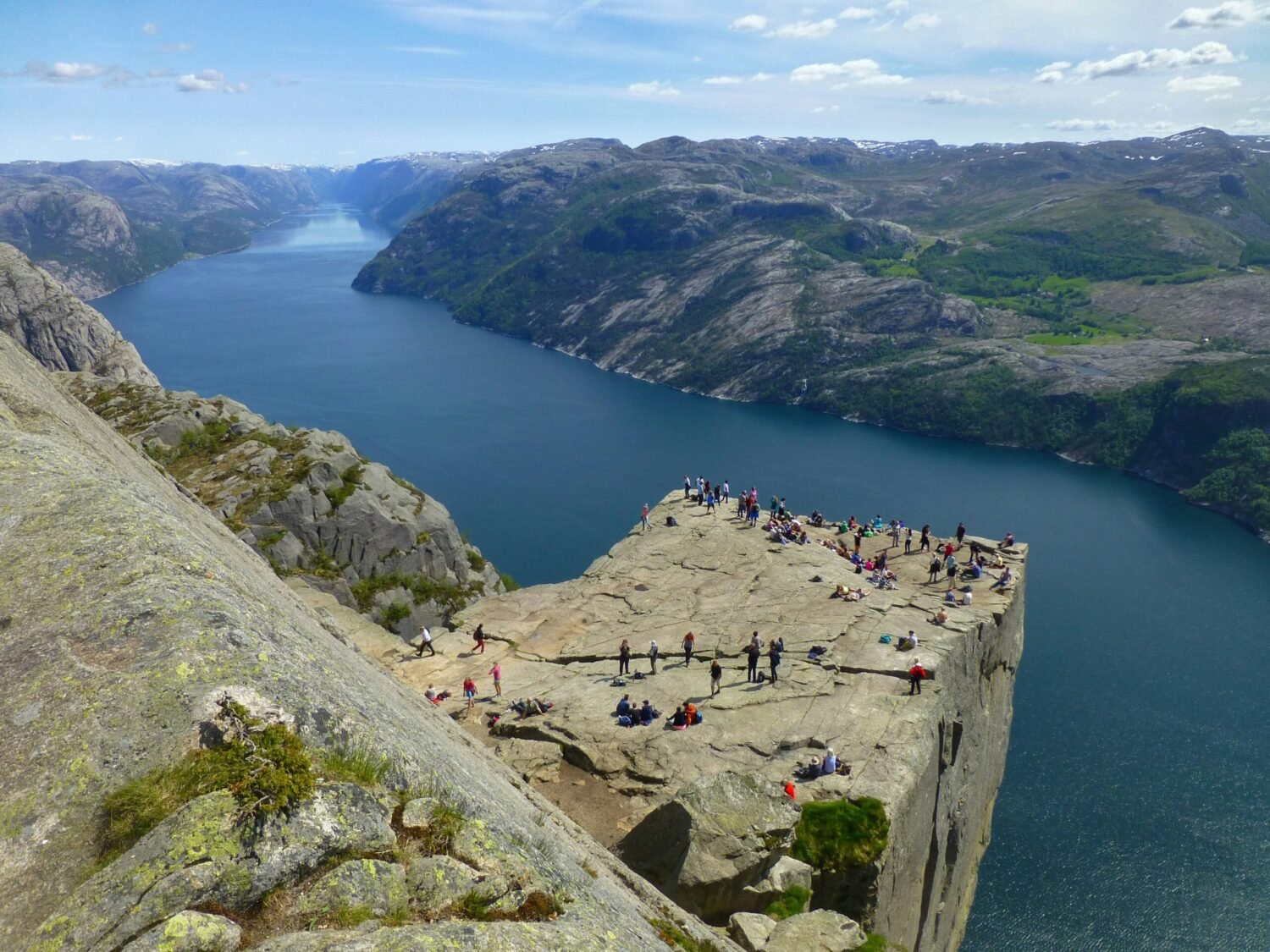
June marks the opening of Norway’s hiking season for most of the country’s famous mountain trails, and the combination of cool temperatures, long daylight, and freshly melted snow creating dramatic waterfalls makes it one of the finest times of year to hike in Scandinavia.
The most iconic hiking trails open in June:
- Preikestolen (Pulpit Rock) — Norway’s most famous hike, a 3.8 km trail each way leading to a flat-topped cliff 604 metres above the Lysefjord. The view from the top is one of the most photographed in the world. The trail opens in late May and June sees growing but still manageable crowds compared to July and August. Allow 4 to 5 hours for the round trip.
- Trolltunga (Troll’s Tongue) — a dramatic rock formation jutting horizontally over a lake 700 metres below, reached by a challenging 11 km trail. The trail opens in June when snow conditions permit — check current conditions before attempting as some sections can still be icy in early June. Allow 8 to 10 hours for the full hike.
- Lofoten Islands hiking — the Lofoten archipelago above the Arctic Circle offers some of Norway’s most dramatic hiking with the added bonus of midnight sun in June. The Ryten trail with its famous Kvalvika Beach viewpoint and the Reinebringen ridge hike above the village of Reine are both exceptional.
- Hardangervidda Plateau — Europe’s largest mountain plateau, opening to hikers in June as the snow recedes. Multi-day routes across the plateau between DNT mountain huts offer a genuine wilderness experience.
A key practical point: some high-altitude trails in Norway still have snow in early June, and conditions can vary significantly from year to year. Always check the Norwegian Trekking Association (DNT) website or local trail conditions before setting out on longer hikes, and carry appropriate footwear with grip for potentially icy patches.
Where to Stay in Norway in June: Best Cities and Bases
Choosing the right base for your Norway June coolcation depends on what you most want to experience. Here is a breakdown of the best options:
Bergen — the best base for fjord access and Norway’s most atmospheric city. Bergen’s UNESCO-listed Bryggen wharf, surrounded by colorful wooden buildings dating back to the Hanseatic trading era, is one of the most beautiful urban streetscapes in Northern Europe. Bergen is the gateway to the Sognefjord, Nærøyfjord, and Hardangerfjord, with direct ferry and train connections. The famous Flåm Railway is a two-hour journey from Bergen. Expect 16 to 20°C and frequent but short rain showers.
Oslo — Norway’s capital is the warmest and most cosmopolitan base, with excellent museums, a vibrant restaurant scene, and good transport connections to the rest of the country. The new Munch Museum, the Viking Ship Museum, and the Vigeland Sculpture Park are all world-class attractions. Oslo is less convenient for fjord access than Bergen but works well as a start or end point for a longer Norway itinerary.
Tromsø — the Arctic capital and the best base for midnight sun experiences. Tromsø is a small, vibrant university city with excellent restaurants, the Arctic Cathedral, and easy access to wilderness experiences including midnight sun boat trips, Arctic wildlife safaris, and hiking in the Lyngen Alps.
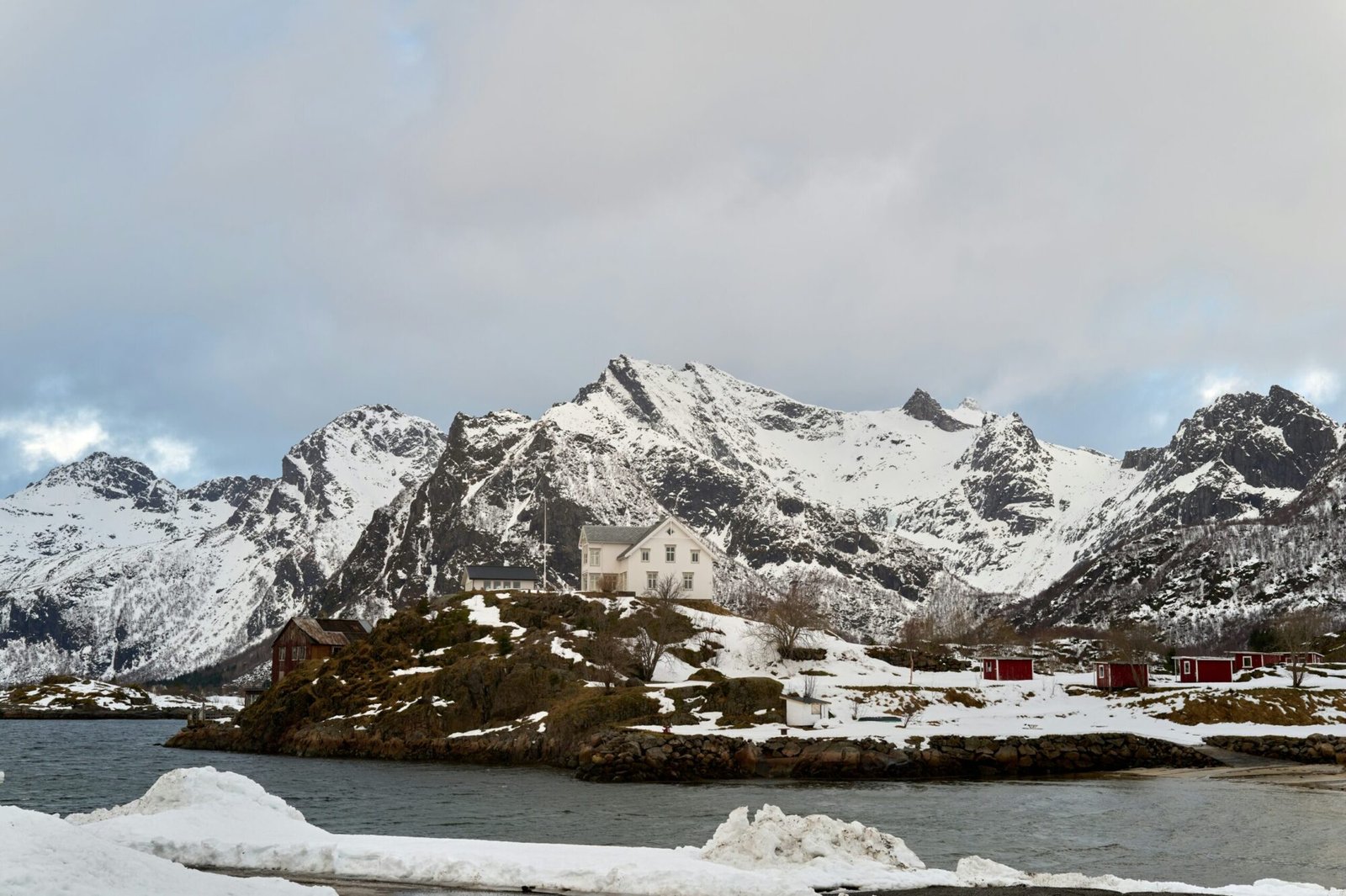
Lofoten Islands — the most dramatic and remote option, best for photographers, serious hikers, and travelers seeking the most authentic Arctic Norway experience. Getting to Lofoten requires a flight from Oslo or Bergen to Bodø or Svolvær, but the effort is completely worthwhile. The landscape — jagged peaks rising directly from the sea, traditional red fishing huts (rorbuer), and 24-hour Arctic daylight — is unlike anywhere else in Europe.
Is Norway Expensive? Honest Budget Guide for June 2026
Norway has a well-earned reputation as one of the most expensive countries in Europe, and it is important to go in with realistic expectations rather than being surprised by costs on arrival.
Typical daily costs in Norway in June 2026:
- Budget traveler (hostel, self-catering, free hikes): €80 to €120 per day
- Mid-range traveler (hotel, restaurant meals, paid activities): €180 to €280 per day
- Comfort traveler (quality hotel, guided tours, fine dining): €350 to €500+ per day
- A restaurant meal in Bergen or Oslo: €20 to €40 for a main course
- A coffee in Oslo: €5 to €7
- A fjord cruise (Nærøyfjord): €35 to €65 per person
- Flåm Railway ticket: €35 to €45 per person one way
- Preikestolen hike: free (parking fee approximately €10 to €15)
The best ways to manage costs in Norway include self-catering accommodation with kitchen access, purchasing groceries at supermarkets like Rema 1000 or Kiwi rather than eating all meals in restaurants, and focusing on Norway’s many free natural experiences — hiking, fjord viewpoints, beaches, and the midnight sun cost nothing. Norway’s best experiences are largely free. It is accommodation and food where the costs accumulate.
Frequently Asked Questions About a Norway June Coolcation
Is Norway the best coolcation destination in Europe in 2026?
Norway is consistently ranked as the top coolcation destination in Europe for 2026, alongside Iceland and Scotland. Its combination of cool June temperatures, the midnight sun experience, world-class fjord and hiking scenery, and relative lack of mass tourism compared to Mediterranean destinations makes it uniquely suited to the coolcation travel style.
Is Norway too expensive for budget travelers?
Norway is expensive, but budget travel is possible with planning. Staying in hostels or self-catering accommodation, cooking your own meals from supermarkets, and focusing on Norway’s many free natural experiences — hiking, fjord viewpoints, beaches, midnight sun — can keep daily costs in the €80 to €120 range. The key is accepting that accommodation and food will cost more than in southern Europe and budgeting accordingly.
Can you see the northern lights in Norway in June?
No. The northern lights require darkness to be visible, and June’s midnight sun means it never gets dark enough in Norway for aurora borealis activity to be seen. The northern lights season in Norway runs from late September to late March. If seeing the northern lights is your primary goal, plan your visit for October to February.
Does the midnight sun affect sleep quality in Norway?
Yes, it can significantly affect sleep, particularly in the first two or three nights. The body’s natural sleep-wake cycle is disrupted by 24-hour daylight. A good quality sleep mask or eye cover is essential. Most Norwegian hotels in northern areas provide blackout blinds, but check before booking. After a few nights, most travelers adjust reasonably well.
Is June or July better for visiting Norway?
June is generally considered the better month for most travelers. Waterfalls are at their most powerful from snowmelt, trails are freshly opened, the midnight sun is at its peak, and crowds — while growing — are smaller than July and August. July is warmer but significantly more crowded at popular sites like Preikestolen and the Geirangerfjord.
Do I need a visa to visit Norway from outside the EU?
Norway is not an EU member but is part of the Schengen Area. Citizens of EU and EEA countries do not need a visa. Travelers from the UK, USA, Canada, Australia, and many other countries can visit Norway visa-free for up to 90 days within any 180-day period under Schengen rules. Indian and other nationalities may require a Schengen visa — check your country’s specific requirements well in advance of travel.
 Final Verdict: Is a Norway Coolcation Worth It in June 2026?
A Norway coolcation in June 2026 is absolutely worth it — and for the right type of traveler, it is genuinely one of the best summer holidays available anywhere in Europe.
If you are tired of arriving at Mediterranean destinations to find 38-degree heat, shoulder-to-shoulder crowds at every famous viewpoint, and the sense that you are sharing your holiday with half of Europe — Norway in June is the antidote. Cool, comfortable temperatures perfect for walking and hiking. Fjord landscapes that remain genuinely awe-inspiring even when you have seen a thousand photographs of them. The midnight sun giving you more usable daylight hours than any other destination on Earth. And a country where the greatest experiences — the hikes, the fjord views, the endless Arctic light — are completely free.
Yes, Norway is expensive once you factor in accommodation and food. Budget carefully, cook some of your own meals, and focus your spending on the experiences that matter most to you. The cost per experience in Norway — when you are standing on Preikestolen above the Lysefjord at midnight under a golden sky — is some of the best value in European travel.
The coolcation trend is not going away. As European summers get hotter and Mediterranean destinations get more crowded, Norway’s fjords, mountains, and extraordinary Arctic light are going to keep drawing travelers north. June 2026 is the perfect time to be one of them.