How much cash to carry in the USA is one of those practical questions that every international visitor thinks about but almost nobody answers honestly and specifically. Most travel guides say something vague like “bring some cash just in case” without telling you exactly how much, what denominations, what you will actually need it for, and how much you are losing if you exchange money at the wrong place. This guide gives you the real numbers for 2026.
The USA is the most card-friendly country in the world — Visa and Mastercard are accepted virtually everywhere, contactless tap-to-pay works at most modern terminals, and Apple Pay and Google Pay function smoothly across the country. But cash is still essential in specific situations that catch international visitors off guard: tipping in cash at restaurants and hotels, street food and farmers markets, parking meters, small local businesses that add credit card surcharges, and the first few minutes after you land when you need a trolley or a coffee before finding an ATM. This guide tells you exactly how much you need, in what denominations, where to get it, and the mistakes that cost other international visitors money every single year.
Also Read:
The Reality of Cash vs Card in the USA in 2026
The United States runs almost entirely on card payments for medium and large purchases. Hotels, restaurants, shops, supermarkets, gas stations, major attractions, Uber, Lyft, and most transport all work seamlessly with international Visa and Mastercard. In major tourist cities like New York, Los Angeles, Chicago, Miami, and Las Vegas, you could technically survive an entire week spending almost nothing in cash — if you knew in advance exactly what requires it.
The problem is that several high-frequency situations do require cash, and running out at the wrong moment is both inconvenient and expensive if it forces you to a bad ATM. Understanding exactly when you need cash versus when your card works fine is the foundation of a good US money strategy.
| Situation | Cash Needed? | Card Works? | Notes |
|---|---|---|---|
| Sit-down restaurants | For tips — yes | Yes for the bill | You pay the bill by card but many people leave cash tips for the server. Cards work for tips too via the tip line on the receipt — but cash tips go directly to the server |
| Hotel housekeeping tip | Yes — cash only | No | Leave $2 to $5 per night in cash on the pillow for housekeeping. There is no card option for this |
| Taxi (yellow cab) | Optional | Yes — most NYC taxis have card readers | Card works in NYC taxis. Some taxis in smaller cities are cash only — ask before you ride if unsure |
| Uber / Lyft | No | Yes — app payment only | Tip in app. No cash needed |
| Street food / food trucks | Often yes | Sometimes | Many food trucks and street vendors are card-only now but a meaningful number remain cash-preferred — carry small bills |
| Farmers markets | Yes — strongly recommended | Sometimes via Square readers | Many small farmers market vendors prefer or require cash. Always carry $20 to $40 specifically for market visits |
| Parking meters | Sometimes | Many now accept card | Newer parking meters in major cities accept card. Older meters in smaller cities and some neighborhoods require coins or cash. Parking apps (ParkMobile, PayByPhone) work at most modern meters |
| Laundromats | Often yes | Rarely | Many US laundromats still require coins (quarters specifically). If staying in budget accommodation without laundry, carry $5 to $10 in quarters |
| Small local businesses | Recommended | Yes but may add surcharge | Some small US businesses add a 3 to 10% credit card surcharge — legal in most states. Cash avoids this fee |
| National park entry | No | Yes | All major US national parks accept credit and debit cards at entry gates |
| Major attractions | No | Yes | Statue of Liberty, Empire State Building, museums, theme parks — all card-friendly, most require advance online booking anyway |
| Supermarkets / grocery stores | No | Yes — always | Card universally accepted. Self-checkout machines accept card and sometimes cash |
| Airport shops and food | No | Yes — always | US airports are fully card-friendly. No need for cash at airport terminals |
Exactly How Much Cash to Carry — By Trip Type
| Trip Type | Recommended Cash on Hand | What It Covers |
|---|---|---|
| City break (NYC, LA, Chicago) — 5 to 7 days | $150 to $250 total | Daily restaurant tips ($10 to $20/day), hotel housekeeping ($3 to $5/night), occasional street food, one or two small vendor purchases, emergency buffer |
| Multi-city trip — 10 to 14 days | $200 to $400 total (replenish at ATMs as needed) | As above plus more tip occasions, parking in some cities, farmers markets, small local shops |
| National parks road trip — 7 to 10 days | $200 to $350 total | Park entry is card-friendly, but small towns near parks often have limited card acceptance. Gas stations in rural areas sometimes prefer cash. Campsite fees occasionally cash-only |
| Las Vegas trip — 4 to 7 days | $300 to $500+ (casino cash separate) | Vegas has high tipping culture — bellhops, cocktail servers, show ushers, dealers all expect tips. If gambling, decide your casino budget separately in cash |
| Florida beach holiday — 7 days | $150 to $250 | Beach vendors, tips, small shops. Florida is card-friendly but beach areas often have cash-preferring vendors |
Tipping is the single biggest driver of cash need for international visitors to the USA. While you can add a tip to a restaurant bill via card by writing it on the receipt or entering it on the payment terminal, cash tips are preferred by service workers because they receive them immediately, in full, without having to wait for payroll processing and without the restaurant taking any portion. Many experienced US travelers carry small bills specifically and entirely for tipping purposes.
| Tipping Situation | Recommended Tip | Cash or Card? | Weekly Cash Needed |
|---|---|---|---|
| Sit-down restaurant (per meal) | 18–20% of pre-tax bill | Either — card tip line works fine | $70–$140 per week (if eating out twice daily) |
| Hotel housekeeping (per night) | $2–$5 per night | Cash only — leave on pillow | $14–$35 per week |
| Hotel bellhop / luggage | $1–$2 per bag | Cash strongly preferred | $2–$8 (on arrival and departure) |
| Hotel concierge (for reservations / help) | $5–$20 depending on service | Cash strongly preferred | Occasional |
| Tour guide (half day) | $5–$10 per person | Cash strongly preferred | Varies by activities |
| Taxi driver | 15–20% of fare | Either — card reader available | Varies |
| Bar (per round of drinks) | $1–$2 per drink | Either — tab tip at end works | Varies |
| Valet parking | $2–$5 when car is returned | Cash strongly preferred | Varies |
ATMs in the USA — Fees, Best Banks, and Strategy
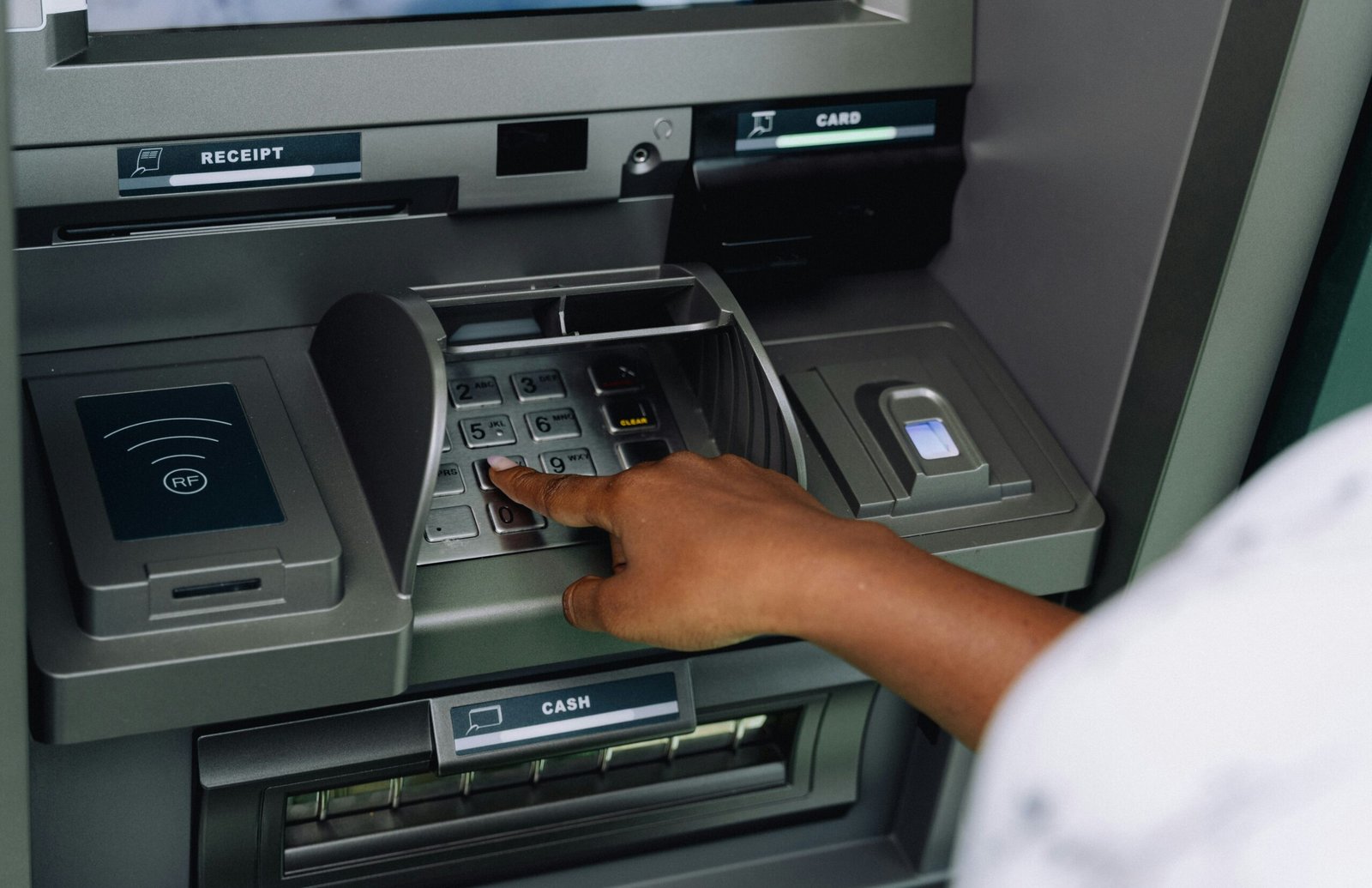
Using ATMs to withdraw cash in the USA as an international visitor involves two separate fees that most people do not fully understand until they see their bank statement. Knowing how to minimize these fees saves you $20 to $50 on a typical holiday.
| Fee Type | Who Charges It | Typical Amount | How to Avoid It |
|---|---|---|---|
| ATM operator surcharge | The US bank or ATM owner | $3.00–$5.00 per withdrawal — displayed on screen before you confirm | Use ATMs at major US banks (Chase, Bank of America, Wells Fargo, Citibank) — their fees are lowest. Avoid standalone ATMs in convenience stores, casinos, and tourist areas — these charge $4 to $8 |
| International withdrawal fee | Your home bank | 1–3% of amount withdrawn OR flat fee of $3–$7 | Use a travel card (Wise, Revolut, Charles Schwab) that waives or reimburses ATM fees. Check your card’s terms before travel |
| Foreign transaction fee (on card purchases) | Your home bank | 1.5–3% on every card transaction | Use a zero-foreign-transaction-fee travel card for all purchases |
| Total cost to withdraw $200 | Combined | $8–$14 (4–7% of withdrawal) | Withdraw larger amounts less frequently to spread the fixed fee. $200 at once costs less per dollar than $50 four times |
Best US Banks for ATM Withdrawals as an International Visitor
| US Bank | ATM Surcharge for Non-Customers | Where to Find Them | Notes |
|---|---|---|---|
| Chase | $3.00 | Nationwide — very widespread in NYC, Chicago, LA, Miami | Most widely distributed US bank — easiest to find in tourist areas |
| Bank of America | $3.00 | Nationwide | Partners with Barclays (UK) and Deutsche Bank (Germany) — customers of these banks may withdraw fee-free |
| Wells Fargo | $3.00 | Strong in West Coast and South | Common in California, Texas, Florida, Nevada |
| Citibank | $3.00 | Major cities only | Global bank — Citibank customers worldwide withdraw fee-free at Citi ATMs globally |
| Standalone / convenience store ATMs | $4.00–$8.00 | Everywhere — gas stations, corner shops, casinos | Avoid these. The operator surcharge is significantly higher and some use poor exchange rates |
The $10,000 Cash Declaration Rule — What International Visitors Must Know

There is no legal limit to how much cash you can bring into the United States. However, if you are carrying more than $10,000 in cash or monetary instruments — including traveler’s checks, money orders, or equivalent in foreign currency — you are legally required to declare it to US Customs and Border Protection by completing a FinCEN 105 form on arrival.
The Dynamic Currency Conversion Trap — Never Make This Mistake
Dynamic Currency Conversion is the single most expensive and most common money mistake international visitors make in the USA — and it happens quietly at payment terminals without most visitors realizing what they agreed to.
When you pay by card at a US restaurant, shop, or hotel, the payment terminal may ask: “Would you like to pay in USD or [your home currency — GBP, AUD, EUR, etc.]?” This seems helpful — pay in your own currency and you know exactly what you are spending. In reality it is the opposite of helpful.
The Credit Card Surcharge — A Growing Issue in the USA
One development that has grown significantly in the USA since 2022 is the credit card surcharge — a fee that small businesses add to your bill specifically because you are paying by card. This is legal in most US states and can be as high as 4 percent at some establishments.
Some businesses hit tourists with a 10% surcharge for credit cards. With sales tax and a minimum 18 percent tip added to the cost of a meal out, a credit card surcharge of 4 percent can push the extras above 30 percent. Small restaurants, coffee shops, convenience stores in tourist areas, and independent retailers are the most common offenders. The surcharge must be disclosed — usually on a small sign at the register or on the menu. When you see a cash discount sign or a card surcharge notice, paying cash saves you 3 to 10 percent on that purchase.
Best Travel Cards for the USA — Avoid Foreign Transaction Fees
Using a standard home-country bank card for all your USA spending triggers foreign transaction fees of 1.5 to 3 percent on every single purchase. On a $3,000 holiday spend, that is $45 to $90 in invisible fees added to your bill. Travel cards eliminate this.
| Card | Foreign Transaction Fee | ATM Withdrawals | Best For |
|---|---|---|---|
| Wise (Transferwise) card | Zero on card purchases | Free up to $100 USD per month, then 1.75% | All nationalities — widely used by international travelers worldwide. Mid-market exchange rate |
| Revolut card | Zero on card purchases (fair usage limits apply) | Free up to $300 USD per month on Standard plan | UK, European, Australian travelers — widely available. Check your country availability |
| Charles Schwab debit card (USA) | Zero | Reimburses ALL ATM fees worldwide — unlimited | Best ATM card on earth for travelers — but requires a US address to open. Works for Americans traveling abroad or expats |
| Halifax Clarity (UK) | Zero | No foreign transaction fee — standard cash advance interest rate applies | UK travelers — one of the best UK cards for USA use |
| Starling Bank (UK) | Zero | Free ATM withdrawals abroad | UK travelers — excellent no-fee card for USA spending |
| Citibank Plus (Australia) | Zero | Free at Citibank ATMs worldwide | Australian travelers — pairs with Citibank’s global ATM network |
How to Handle Money Smart on Arrival at a US Airport
- Arrive with at least $50 USD in cash already on you. Get this from your home bank, a travel money exchange before departure, or an ATM at your home airport before flying. You need cash immediately on landing for airport trolleys (if paying), drinks, and the first taxi tip before you find an ATM.
- Find a major bank ATM in the arrivals hall. Chase, Bank of America, Wells Fargo, and Citibank all have ATMs in major US airport arrivals halls. Use these rather than standalone ATMs or airport exchange counters. Withdraw $200 to $300 to cover your first 2 to 3 days.
- Ask for $20 bills then break one immediately. ATMs dispense $20 bills. Break a $20 at the first convenience store or coffee shop purchase to get $1, $5, and $10 bills for tips. Do this before you reach your hotel.
- Do not exchange currency at the airport exchange counter. Rates are 8 to 15 percent worse than an ATM. The 5-minute walk to an airport ATM saves real money.
- Set your card to notify you of foreign transactions. Enable transaction notifications on your bank app before flying so you can immediately catch any fraudulent charges on your card while in the USA.
Cash Needs by US City — Where You Need More, Where Less
| City / Destination | Cash Dependency | Recommended Daily Cash | Specific Needs |
|---|---|---|---|
| New York City | Low to moderate | $30–$60/day | Tip cash for restaurants and hotels, occasional cash-only small restaurants in outer boroughs. Subway and most transport card-friendly |
| Las Vegas | High | $50–$100+/day (excluding gambling) | Tipping culture is intense — dealers, cocktail servers, bellhops, show ushers. Casino floor operations are largely cash. Decide gambling budget separately |
| Los Angeles | Low to moderate | $30–$50/day | Farmers markets, street food in areas like Grand Central Market. Most LA restaurants and shops fully card-friendly |
| Miami | Moderate | $40–$70/day | South Beach beach vendors and some Latin restaurants prefer cash. High tipping culture in service-heavy beach resort areas |
| National Parks | Moderate to high | $40–$80/day | Small towns near parks (gateway communities) often have limited card acceptance. Campground fees sometimes cash-only. Visitor center gift shops are card-friendly |
| New Orleans | High | $50–$80/day | Frenchmen Street live music venues often have cash-only bars. Street musicians expect tips in cash. French Quarter market vendors prefer cash. One of the most cash-dependent major US tourist cities |
| San Francisco | Low | $20–$40/day | One of the most cashless cities in the USA. Card accepted almost universally. Cash mainly needed for tips and occasional farmers market |
| Washington DC | Low | $20–$40/day | Smithsonian museums are free and card-friendly. Tips for tour guides and restaurants are the main cash need |
Denominations to Carry — Exactly What Bills You Need
| Bill | Primary Use | How Many to Carry |
|---|---|---|
| $1 bills | Individual drink tips at bars, street musicians, bathroom attendants, vending machines, laundromat coins | 10 to 20 at all times — replenish constantly |
| $5 bills | Larger tips, street food, small purchases, breaking for change | 5 to 10 in your wallet |
| $10 bills | Taxi tips, tour tips, casual tipping situations | 3 to 5 in your wallet |
| $20 bills | General spending, breaking for smaller bills, emergency cash | 3 to 5 in your wallet — what ATMs dispense |
| $50 or $100 bills | Emergency reserves only — kept separate from daily wallet | 1 to 2 maximum — hard to break at small vendors |
The Complete US Money Strategy — Summary
| Situation | What to Do |
|---|---|
| Before you fly | Get $50 to $100 USD in hand at home bank or travel money provider. Apply for a no-foreign-transaction-fee travel card (Wise, Revolut, Starling). Enable foreign transaction notifications on all cards |
| At the US airport | Use major bank ATM in arrivals (Chase, Bank of America, Wells Fargo). Withdraw $200 to $300. Never use the airport exchange counter |
| Daily spending | Card for hotels, restaurants, shops, transport, attractions. Cash for tips, small vendors, markets, parking meters |
| At payment terminals | Always choose USD — never choose your home currency (DCC trap) |
| Tipping | 18 to 20% at sit-down restaurants. $2 to $5/night housekeeping in cash. $1 to $2/bag bellhop. Keep $1 and $5 bills always available |
| ATM withdrawals | Use major bank ATMs only. Withdraw $200 at a time rather than $50 four times — reduces per-dollar fee cost |
| Total cash to carry at any one time | $150 to $300 for most city visitors. $200 to $400 for Las Vegas or New Orleans. $200 to $350 for national park road trips |
Final Verdict
How much cash to carry in the USA in 2026 comes down to a simple formula: enough for tips, small vendors, and a comfortable emergency buffer — but not so much that you are carrying unnecessary risk or missing better exchange rates by over-relying on pre-exchanged cash. For most international visitors to major US cities, $150 to $300 at any one time is the right amount. Replenish from major bank ATMs as needed. Use a no-foreign-transaction-fee travel card for everything your card can handle. Always choose USD at payment terminals. Keep your wallet stocked with $1 and $5 bills at all times — they are the most-used denomination in America’s tipping economy and the hardest to get when you run out at the wrong moment.
Also Read :
1. Is Tap Water Safe to Drink in the USA – Read Full Article
2. How Much Does a Trip to USA Cost Complete 2026 Budget Guide – Read Full Article
3. First Time Visiting USA. The Complete Guide for International Visitors – Read Full Article
4. How to Get a Refund for a Canceled Flight in the USA – Read Full Article
5. Can You Bring Food Through TSA on Domestic Flights in the USA – Read Full Article
Frequently Asked Questions
How much cash should I bring to the USA as a tourist?
For most international tourists visiting major US cities for 7 to 10 days, bring or access $150 to $300 USD in cash at any one time. This covers daily restaurant tips ($10 to $20 per meal), hotel housekeeping tips ($2 to $5 per night in cash), occasional street food and market purchases, and a comfortable emergency buffer. Use your card for all larger purchases — hotels, restaurants, shops, transport, and attractions. Replenish cash at major bank ATMs (Chase, Bank of America, Wells Fargo) as needed rather than carrying a week’s cash all at once.
Do I need cash in the USA or can I use my card everywhere?
The USA is one of the world’s most card-friendly countries — Visa and Mastercard are accepted virtually everywhere including restaurants, shops, supermarkets, hotels, major attractions, and transport. However, cash is specifically needed for hotel housekeeping tips (no card option), street food vendors and farmers markets (some cash-only), laundromats (often coin-operated), parking meters in older areas, and small businesses that add credit card surcharges. Carry $150 to $300 in cash for these situations and use your card for everything else.
Should I exchange money before going to the USA?
Exchange a small amount — $50 to $100 USD — before departure so you arrive with cash in hand for immediate needs. Get this from your home bank or a reputable travel money provider at a good rate. Do not exchange large amounts before departure as home bank and travel money rates are rarely better than a US bank ATM rate. For the bulk of your cash needs, withdraw from major bank ATMs (Chase, Bank of America, Wells Fargo, Citibank) inside the USA after arrival — these give the real exchange rate plus a $3 to $5 flat fee, which is significantly better than airport exchange counters.
Is there a limit on how much cash I can bring into the USA?
There is no limit on how much cash you can bring into the United States. However, you must declare to US Customs and Border Protection if you are carrying more than $10,000 in cash or monetary instruments by completing a FinCEN 105 form. This applies per person or family traveling together, and covers all currencies combined. Failing to declare more than $10,000 is a serious federal offense and CBP can seize the entire amount. For standard holidays, carrying this much cash is extremely unusual — most visitors carry $200 to $500 and will never encounter this rule.
What is the best way to get USD cash in the USA?
The best way to get USD cash in the USA is withdrawing from ATMs at major US banks — Chase, Bank of America, Wells Fargo, and Citibank are the most widely distributed. These charge $3 to $5 as an operator surcharge, which is the lowest available from any US ATM. Your home bank also charges an international withdrawal fee (1 to 3%) — using a travel card from Wise, Revolut, or Starling eliminates or reduces this. Avoid airport exchange counters (rates 8 to 15% worse than ATMs), hotel exchange services (similarly poor rates), and standalone ATMs in convenience stores, casinos, and tourist kiosks (operator fees of $4 to $8).
What denominations of US dollars should I carry?
The most useful US dollar denominations for daily tourist use are $1, $5, $10, and $20 bills. One-dollar bills are the most important — they are essential for tips at bars ($1 to $2 per drink), street musicians, bathroom attendants, and any situation requiring a small individual tip. Five-dollar bills are useful for larger individual tips and small vendor purchases. ATMs in the USA dispense $20 bills — break these at a convenience store or supermarket on your first day to get smaller denominations. Avoid relying on $50 or $100 bills for daily use — many small businesses, food trucks, and vendors decline large bills.